"Gentle Makeup Removal" Surfactant Selection: Cleansing Power Comparison of PEG-6 Caprylic/Capric Glycerides vs. Amino Acid-Based Surfactants

Updated: Sep 17
I. The Core Contradiction of "Gentle Cleansing": The Eternal Game Between Cleansing Power and Irritation
In makeup remover formulations, the selection of surfactants is the most fundamental variable determining the final product performance—it simultaneously dictates cleansing efficiency (whether it can remove makeup) and skin friendliness (whether the skin barrier remains intact after makeup removal), two formulation goals that often point in opposite directions.
SLS (Sodium Lauryl Sulfate) can efficiently remove all oils, but it also strips away the skin's natural lipid barrier; pure water causes no harm to the skin, but it completely fails to remove eyeliner and waterproof foundation.
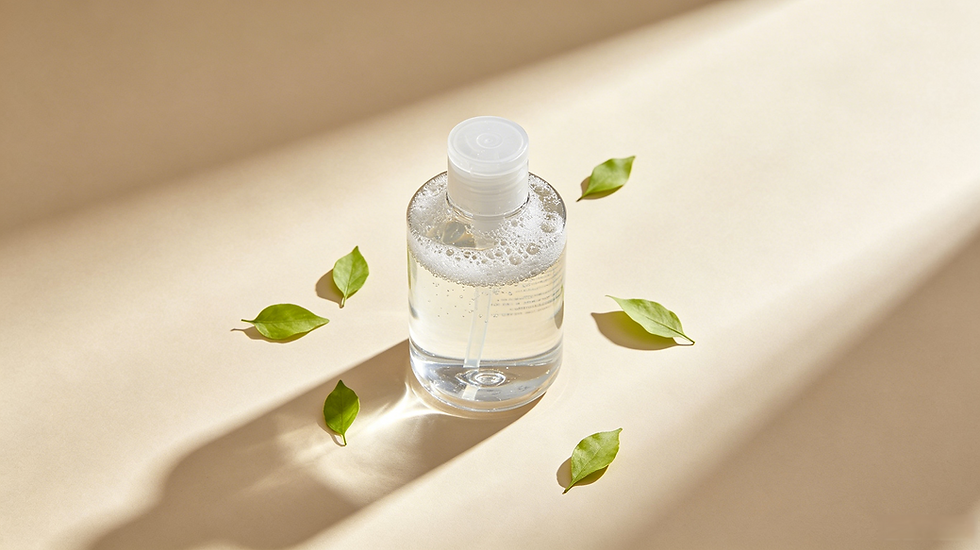
The answer to this contradiction has split into two technological routes over the past two decades:
Route 1: Non-ionic ester solubilizers represented by PEG-6 Caprylic/Capric Glycerides—removing makeup through a dissolution mechanism, gentle and highly efficient, and one of the core functional ingredients in the most mainstream micellar water brands on the market (such as Bioderma, La Roche-Posay).
Route 2: Next-generation green cleansing ingredients represented by Amino Acid-Based Surfactants—coexisting "harmoniously" with the skin through biocompatible molecular structures, representing the technical ceiling of formulation gentleness, and rising rapidly in high-end Asian markets (especially Japan and China) in recent years.
Both routes have their own technical logic, applicable scenarios, and formulation challenges. This article will systematically compare the cleansing mechanisms, performance boundaries, and brand application strategies of these two types of ingredients from the perspective of a formulation engineer.
II. PEG-6 Caprylic/Capric Glycerides: Analysis of the Core Functional Ingredients in Micellar Water
Chemical Nature and Ingredient Definition
PEG-6 Caprylic/Capric Glycerides (INCI: PEG-6 Caprylic/Capric Glycerides) are polyethylene glycol derivatives of mono-, di-, and triglycerides of caprylic/capric acids, containing an average of 6 moles of ethylene oxide. It is a hydrophilic, thin, and transparent liquid, soluble in aqueous surfactant solutions, capable of solubilizing oily ingredients and oil-soluble raw materials, with a good skin feel.
More simply put: it is an ester formed by coconut oil fatty acids (C8 caprylic acid + C10 capric acid) and glycerin, which is then ethoxylated (PEG-ized) to gain hydrophilicity, allowing it to self-assemble into micellar structures in aqueous solutions.
Cleansing Mechanism: Dual Mechanism of Dissolution + Micellar Encapsulation
PEG-6 Caprylic/Capric Glycerides is a highly efficient non-ionic surfactant and solubilizer, and has become the core ingredient for the massive market success of gentle cleansing products like micellar water; its principle is to adsorb and lift dirt, oil, and makeup through micellar structures.
Unlike ionic surfactants like SLS, PEG-6 Caprylic/Capric Glycerides, as a non-ionic ingredient, has a hydrophobic core that can dissolve oily makeup components (waxes and silicones in foundation; film-forming polymers in mascara), while the hydrophilic PEG chains keep the micelles in the aqueous phase, physically wiping the micelles loaded with makeup away from the skin using a cotton pad.
Performance Advantages
PEG-6 Caprylic/Capric Glycerides can gently extract sebum and impurities while minimizing irritation, providing a soft post-cleansing skin feel; it enhances rinseability to reduce residual film feel; and is widely used in micellar waters, gentle cleansing waters, and cleansing milks.
As an emulsifier, emollient, refatting agent, solubilizer, and wetting agent, its recommended usage concentration in cosmetics is 0.5%–5%. It can prevent moisture loss by supplementing the skin surface with a mixture of fatty acids and has good skin tolerance.
Limitations and Challenges to Understand
The "Clean Beauty" Cognitive Risk of PEG Ingredients: Because the ingredient name contains "PEG," some consumers and Clean Beauty certification systems (such as COSMOS) regard it as a synthetic ingredient and avoid it, even though its safety is well-documented in the literature.
The Ceiling of Cleansing Power: PEG-6 Caprylic/Capric Glycerides has good cleansing efficiency for moderately waterproof makeup in micellar water formulations (0.5%–2% usage), but its single-wipe removal rate for ultra-strong long-lasting waterproof ingredients (such as polymer film-forming waterproof mascara) is limited, usually requiring compounding with other ingredients or double cleansing.
Taste Issues in Eye Area Use: As pointed out by formulation engineer communities, PEG-6 Caprylic/Capric Glycerides has a significant bitter taste when contacting the area near the lips, which is a sensory issue formulators need to pay attention to in eye and lip makeup removers.
III. Amino Acid-Based Surfactants: The Scientific Basis of Next-Generation Gentle Cleansing Ingredients
Chemical Nature: Molecular Structures the Skin "Recognizes"
Amino Acid-Based Surfactants are a class of green surfactants formed by the condensation of the amino group of natural amino acids (glycine, glutamic acid, alanine, sarcosine, etc.) and the carboxyl group of fatty acids (lauric acid, cocoyl acid, palmitic acid, etc.) through amide bonds.
Their molecular structure characteristics:
Hydrophilic Head Group: Amino acid derivatives (highly similar to the structure of natural skin proteins/amino acids)
Hydrophobic Tail Chain: Fatty acid chains (mainly C12–C14)
Ionizable Characteristics: Depending on the formulation pH, they can exhibit anionic or amphoteric characteristics
Performance Differences of the Four Mainstream Varieties
Amino acid-based surfactants are mainly classified by the amino acid type of their hydrophilic head group, with each category providing different performance characteristics suitable for specific cosmetic applications. Glutamate esters (such as Sodium Lauroyl Glutamate) are renowned for their outstanding foaming ability and "clean" sensory characteristics—because glycine is the smallest amino acid, the surfactant head group formed is compact and can arrange efficiently at the air-water interface, producing rich foam.
Amino Acid Surfactant Variety | INCI Name (Representative) | Cleansing Power | Foaming | Applicable pH |
Glutamates | Sodium Lauroyl Glutamate, Disodium Lauroyl Glutamate | Medium | Low | 5.5–7.0 |
Glycinates | Sodium Cocoyl Glycinate | Medium-High | High | 6.0–7.5 |
Alaninates | Sodium Lauroyl Alaninate | Medium | Medium-High | 5.5–7.0 |
Sarcosinates | Sodium Lauroyl Sarcosinate | High | High | 4.5–6.5 |
Research clearly shows that among all tested surfactants, glutamates are the safest and gentlest, followed by alaninates and glycinates, while the safety and gentleness of SLES (Sodium Laureth Sulfate) are far below the amino acid surfactant category. Sulfates leave residues on the skin, increasing irritation potential; glutamates used as co-surfactants have been proven to improve this situation, with Lee first confirming that Sodium Lauroyl Glutamate is a mild surfactant whose use can reduce the irritation potential of SLS.
Scientific Evidence of Gentleness
Traditional surfactants (like SLS) are known to cause protein denaturation and lipid solubilization in the stratum corneum, leading to increased TEWL (Transepidermal Water Loss) and irritation. In contrast, amino acid surfactants interact much more gently with skin proteins. Their molecular structures are closer to the skin's natural components, offering better compatibility with skin barrier function.
A clinical study published in the journal Cureus in August 2025 evaluated the safety and efficacy of a soap-free cleansing lotion containing apple amino acids (Sodium Cocoyl Apple Aminoates) in removing surface dirt while maintaining skin barrier function. The subjects included healthy adults with various skin types such as dry and oily, and the conclusion supported its effective cleansing ability under the premise of maintaining barrier integrity.
Challenges of Amino Acid-Based Surfactants
The pH Dependency Issue—This is the core technical challenge of amino acid surfactants in makeup remover formulations: Unlike alkyl sulfates, pH is an interesting variable for adjusting their functional properties. The optimal performance pH for glutamates is about 5.5–7.0; below the optimal pH, their hydrophilic head groups become protonated, micelle formation capacity drops, and cleansing efficiency significantly decreases. This means makeup remover formulations containing amino acid surfactants require precise pH control, finding a balance between gentleness (neutral, close to skin pH) and surfactant performance (pH window).
Naturally Lower Cleansing Power Than Ionic Surfactants: Glutamates have the lowest Critical Packing Parameter (CPP), tending to form spherical micelle structures, which makes them difficult to thicken; while the CPP of glycinates is about 0.4, forming cylindrical or worm-like structures. The micellar structure of amino acid surfactants is suitable for daily light makeup cleansing, but its single-removal ability for highly long-lasting waterproof base makeup is inferior to the micellar water combination of PEG-6 Caprylic/Capric Glycerides + Poloxamer.
Foaming and Consumer Sensory Perception: Glutamates produce low foam, and many consumers (especially in the European and American markets) still equate "foaming" with "cleansing power"—although this cognition is inaccurate, it is a realistic challenge in product sensory design that brand owners need to plan consumer education strategies for in advance.
IV. Sustainability Advantages of Amino Acid-Based Surfactants: An Extra Bonus Point for the 2026 Market
Glutamates, alaninates, and alkyl polyglucosides are the three types of ingredients with the best sustainability. Their Natural Origin Index (NOI) reaches 100%, ranking highest among all tested surfactant categories.
Amino acid surfactants are derived from renewable resources and decompose into harmless, inert molecules (amino acids and fatty acids), without persisting in aquatic environments—this ecological characteristic makes them a priority choice for sustainable skincare formulations, universally receiving high ratings in the European COSMOS certification and the US EWG certification systems.
Against the backdrop of the continuous rise in sustainable ingredient demands in the 2026 global skincare market, the advantages of amino acid surfactants in carbon footprint, biodegradability, and renewable sources are becoming an additional supporting dimension for brand premiumization.
V. Regulatory Dynamics of PEG Ingredients: Market Changes Brand Owners Must Understand
The safety of PEG-6 Caprylic/Capric Glycerides itself has been confirmed by the EU CosIng database and the CIR (Cosmetic Ingredient Review) committee, and it is currently a compliant ingredient in mainstream markets in the EU, US, and Asia.
However, brand owners must pay attention to the following regulatory and certification-level dynamics:
COSMOS Certification (European Organic and Natural Cosmetics Certification): PEG ingredients are not allowed in COSMOS Organic certified products.
German BDIH Certification: Also excludes PEG ingredients.
Chinese Market: PEG ingredients are compliant in the Inventory of Existing Cosmetic Ingredients in China, but products positioned as "natural and organic" usually proactively avoid them to align with consumer perception.
EU PEG Ingredient Impurity Control: Manufacturers need to confirm that the content of 1,4-Dioxane (a byproduct of the ethoxylation process) in raw materials meets the requirements of the EU Cosmetics Regulation (usually ≤10 ppm).
Choosing an OEM is a supply-chain decision, not a price comparison.
The lowest quoted unit cost collapses if the second order arrives late or the formula drifts. What you are actually buying is repeatability across reorders — and that is a factory decision, not a purchasing one.
We scope projects against your launch date, target market and margin, then hold to the agreed specification.
By collaborating with See how we work with brand owners you gain access to industry-leading expertise and innovative formulations that set your brand apart in the competitive global market. Send your brief and target timeline; we will come back with a costed plan, not a price list.
Gentle Makeup Removal Conclusion: Surfactant Selection is Formulation Language, and Also Brand Strategy
PEG-6 Caprylic/Capric Glycerides and Amino Acid-Based Surfactants represent not just two raw material choices, but two complete sets of formulation values: one centered on cleansing efficiency and cost-effectiveness, and the other centered on biocompatibility and sustainability.
In the 2026 makeup remover market, both routes have their clear market positioning and growth space—the key lies in brand owners making a clear value proposition at the product initiation stage and finding factory partners with corresponding formulation technical accumulation.
If you are planning gentle makeup removers, sensitive skin cleansing series, or organic certified cleansing products, please feel free to connect deeply with our formulation team.


Comments