Glucoside vs Amino Acid vs Sulfosuccinate Surfactant Systems for Tear-Free Baby Wash: Foam, Mildness and Cost Compared

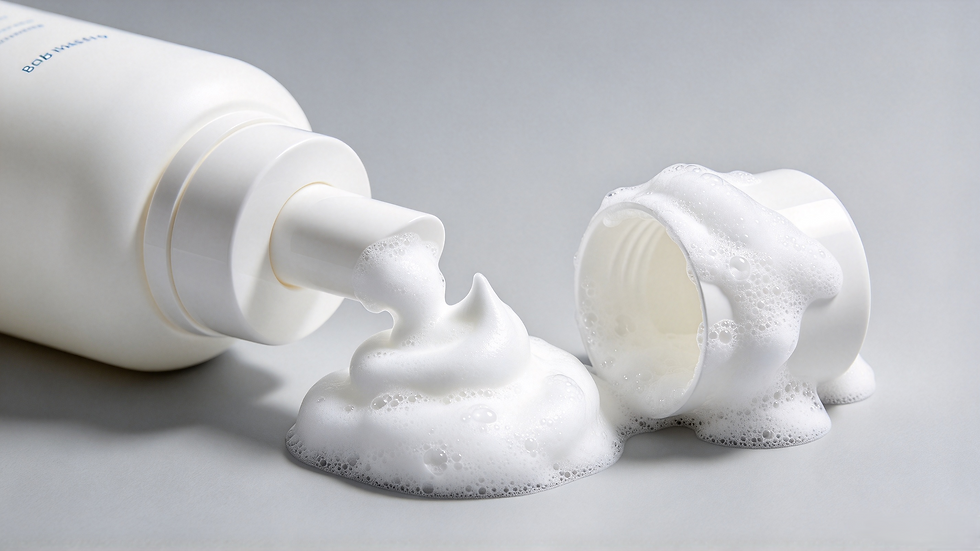
A tear-free baby wash starts with the surfactant system, not with the fragrance or the bottle. Three families do most of the work in infant cleansers today. Glucosides bring mildness and a soft, stable foam. Amino acid surfactants bring a fine lather and a low irritation profile. Sulfosuccinates bring the lowest eye irritation of the three and the weakest foam. Each family carries its own cost and its own pH window. Choosing one on a supplier claim alone usually ends in a reformulation at the stability stage. This comparison covers foam, mildness, cost and the eye irritation data that holds the claim up.
Which Surfactant System Fits a Tear-Free Baby Wash?
Most tear-free baby washes use two or three surfactant families at once, because no single family delivers foam, mildness and cost together. The primary surfactant carries the cleaning load. A co-surfactant lowers irritation and lifts the foam. A thickener or a polymer restores the body that a mild system cannot build with salt. Eye comfort in the finished wash depends more on the co-surfactant blend than on the primary choice.
The primary family sets the mildness ceiling
An anionic primary cleans well and irritates the most. A non-ionic glucoside primary irritates far less and foams less. Sulfosuccinates sit at the mild end, and their foam is too weak to stand alone. The primary family fixes how mild the finished wash can ever be.
The co-surfactant blend decides eye comfort
Eye stinging tracks the free monomer concentration at the corneal surface, not the total surfactant level. A second family lowers that free monomer through mixed micelle formation. A betaine, a glucoside or a sulfosuccinate all do that job. In a tear-free baby wash, the blend ratio matters more than the headline ingredient on the pack.
Why Does a Wash Sting the Eye in the First Place?
Tear film pH runs between 7.0 and 7.4, and the corneal nerves read any shift from that band as pain. Those nerves sit close to the surface, so the signal arrives within seconds. Stinging is a nerve response to a pH shift and to surfactant monomers that reach the membrane. Tissue damage is a separate question, and it needs far more exposure than a splash.
Two mechanisms run at the same time
A pH mismatch acts first and acts fast. Surfactant monomers act second, because they insert into the cell membrane and unfold proteins. Small monomers penetrate faster than large ones. Molecule size therefore predicts sting as well as charge does, which is the practical case against small sulfates.
Dilution in the bath changes the dose
A tear-free baby wash reaches the eye already diluted in bath water. Dilution lowers the concentration and also pulls an acidic formula toward neutral. Once the product is in the eye, a fast rinse helps more than any formula change. Rinse speed is a formulation variable that most briefs leave out.
Factor | Value at the eye | What it means for a wash |
Tear film pH | 7.0 to 7.4 | A base near pH 7 stings less on contact |
Tear film buffering | Low, no strong buffer | A large pH shift is felt quickly |
Corneal nerves | Dense and pH sensitive | Stinging registers before damage starts |
Monomer size | Small monomers penetrate faster | Molecule size drives sting |
Contact time | Seconds to a minute per bath | Rinse speed sets the dose in a tear-free baby wash |
How Do Glucoside Surfactants Behave in a Baby Wash?
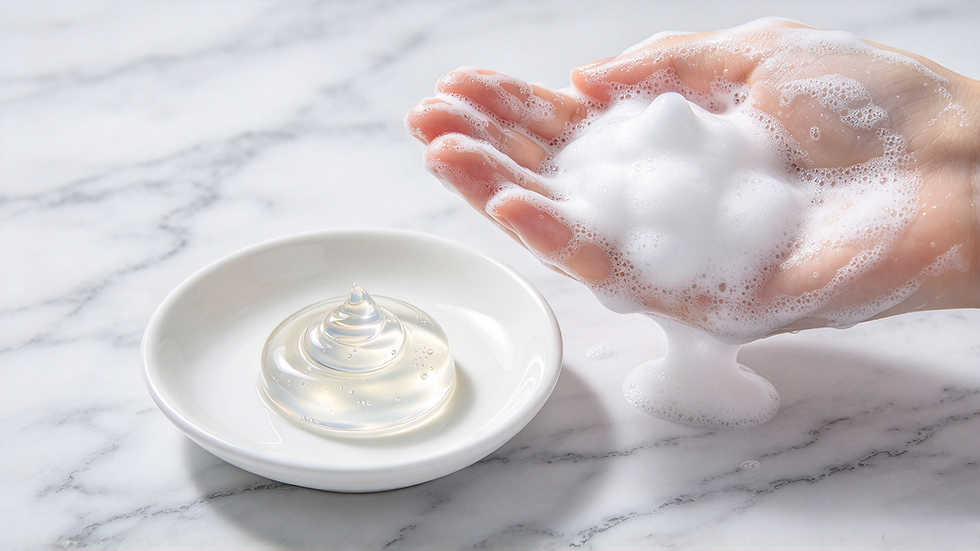
Coco glucoside and lauryl glucoside give stable, creamy foam at low irritation, and neither one needs an ethoxylation step. Decyl glucoside is milder again and foams less. The family is non-ionic, so it will not build viscosity with salt. A glucoside primary usually needs a betaine for flash foam and a polymer for body.
Foam quality rather than foam volume
Coco glucoside makes a dense foam with small bubbles. Decyl glucoside makes a coarser foam, and the bubbles drain faster. Lauryl glucoside foams best of the three and sits between them on mildness. Blending a glucoside with a betaine lifts the foam volume a tear-free baby wash needs, without adding irritation.
What glucosides ask of the formulator
Glucosides cost more per kilogram than a sulfate system and less than an amino acid system. They carry residual fatty alcohol, so the specification has to set a limit. They hydrolyse in strongly acidic conditions, so the base normally runs between pH 5.0 and 7.0. The preservative system then has to work in that band.
How Do Amino Acid Surfactants Behave in a Baby Wash?
Sodium cocoyl glycinate and sodium lauroyl sarcosinate deliver a fine, dense lather at a low irritation level. Sodium methyl cocoyl taurate adds hard water tolerance. Glutamate surfactants are milder again and foam less. This family is the usual primary in premium infant hair and body wash.
A fine lather and a longer rinse
Amino acid surfactants make small bubbles that hold their shape and feel denser on the skin. The foam rinses more slowly than a sulfate foam, which shows up in the consumer rinse test. Glycinates foam best in soft water, and sarcosinates hold their foam in hard water. Water hardness in the target market picks between them.
pH control decides performance
These surfactants work best between pH 5.0 and 6.5, where the acid form stays stable. A glycinate system thickens with salt or with a betaine, and it tolerates only a limited salt load. Raising the pH to match tear pH can cost foam and clarity in a tear-free baby wash. The tear comfort target and the skin comfort target have to be balanced in the brief.
How Do Sulfosuccinates Behave in a Baby Wash?
Disodium laureth sulfosuccinate and disodium lauryl sulfosuccinate are the mildest anionics in common infant use. Their eye irritation sits at the bottom of the scale across the commercial families. The trade is foam. Sulfosuccinates give low, loose foam, so they work as a co-surfactant rather than as a primary.
A co-surfactant role, not a primary one
A sulfosuccinate at 10% to 30% of the surfactant blend cuts the irritation of the whole system. It also widens the cloud point tolerance of the base. Used alone, it cannot reach the foam volume consumers expect from a tear-free baby wash. Most briefs for a tear-free baby wash pair it with a glucoside or an amino acid primary.
Two limits to plan for
The laureth version is ethoxylated, so it can carry trace 1,4-dioxane and needs a specification limit. The lauryl version is not ethoxylated. Both hydrolyse at pH extremes and under prolonged heat, so storage and stability work matters more here. Sulfosuccinate systems are also harder to preserve.
How Do the Three Families Compare on Foam, pH and Mildness?
Foam and mildness pull against each other across the three families, and cost adds a third axis. Glucosides lead on cost and foam stability. Amino acid surfactants lead on lather quality. Sulfosuccinates lead on eye tolerance. No family leads on all three counts, which is why the blend decides the result.
Foam, pH window and the viscosity route
Foam volume separates the three families faster than any other property, and viscosity follows the family you pick. A glucoside base needs a polymer. An amino acid base thickens with a limited salt load. A sulfosuccinate base thins easily and needs a co-surfactant to hold body.
Family | Foam volume alone | Bubble texture | Stable pH window | Viscosity route | Hard water |
Glucosides | Medium, boosted by a betaine | Dense and creamy | 5.0 to 7.0 | Polymer, salt gives little | Tolerates moderate hardness |
Amino acid surfactants | Medium to high | Fine and dense | 5.0 to 6.5 | Salt or betaine, limited load | Sarcosinates hold, glycinates drop |
Sulfosuccinates | Low | Loose and fast draining | 5.5 to 7.0 | Needs a co-surfactant | Tolerates moderate hardness |
Mildness and the eye irritation signal
Mildness data separates the amino acid and glucoside families less than marketers suggest. Both sit in the mildest band used in infant cleansers. The sulfosuccinates go a step further on eye irritation and give up foam to get there.
Family | Eye irritation screening | Protein damage signal | Sensitiser risk | Typical use level |
Glucosides | Very low | Low | Very low, decyl glucoside is a rare sensitiser | Primary, 3% to 8% |
Amino acid surfactants | Very low | Low | Very low | Primary, 3% to 8% |
Sulfosuccinates | Lowest of the three | Lowest | Very low | Co-surfactant, 1% to 4% |
What Does Each Family Cost, and How Does It Reshape the Formula?
Cost ranks the three families in a clear order, and that order is not the order of mildness. Amino acid surfactants cost the most per kilogram, and they are usually the largest single raw material line in the formula. Sulfosuccinates cost less per kilogram but sit high among the mild anionics, and they are used at a low level. Glucosides cost more per kilogram than a sulfate system and less than an amino acid system.
Where the money goes beyond the surfactant
The surfactant is one line in the cost sheet. A tear-free baby wash system is sulfate free, so it needs a polymer for viscosity, and that polymer adds cost that a salt-thickened system avoids. A milder preservative system costs more per kilogram than a paraben system. A preservative-free design pushes the pack toward an airless pump or a single-dose sachet, which raises unit cost and shortens the shelf life after opening.
What changes on the line and in the lab
A glucoside base foams less in the filling tank and needs a longer mixing time. An amino acid base is more sensitive to salt, so the water specification matters. A sulfosuccinate base needs a tighter pH and temperature window in storage. All three add compatibility and stability work before the first sample is approved.
Cost driver | What it moves | Which family it hits hardest |
Surfactant cost per kilogram | The largest single line in the formula | Amino acid surfactants |
Use level in the blend | Multiplies the raw material cost | Sulfosuccinates, used at a low level |
Thickener or polymer | Adds a line a salt system avoids | Glucosides |
Preservative system | Rises as the pH window narrows | Glucosides and sulfosuccinates |
Eye irritation testing | Adds a test block before launch | Any tear-free baby wash |
Raw material prices move with feedstock and contract volume, and suppliers quote them under confidentiality. We do not publish per-kilogram figures. The ranking above holds across the quotes we see, and your target cost per unit belongs in the brief.
Which Blend Delivers a Tear-Free Baby Wash in Production?
Three blend architectures cover most infant wash briefs, and each one targets a different market position. A glucoside and betaine base carries a value sulfate-free claim. An amino acid primary with a sulfosuccinate co-surfactant carries the premium tear-free position. A sulfosuccinate-heavy blend carries newborn and fragrance-free formats where the eye comfort bar is highest.
Matching the architecture to the market
A value brief needs the lowest raw material cost that still clears a sulfate-free claim, and a glucoside base fits. A premium brief needs a fine lather and a defensible eye comfort story, and an amino acid primary with a sulfosuccinate co-surfactant fits. A newborn brief needs the lowest irritation profile available and can accept lower foam. Fix the position first, then pick the families.
Holding the claim with real evidence
The claim rests on how the wash behaves on the eye area, not on the ingredient list. In the European Union, Article 20 of Regulation (EC) No 1223/2009 read with Commission Regulation (EU) No 655/2013 requires adequate and verifiable evidence for every claim. That evidence belongs in the product information file under Article 11. In China, a tear-free formula claim needs human data. T/SHRH 065-2025, issued on 30 June 2025 and effective from 30 July 2025, sets two routes: a consumer test and a human trial on the eye area, covering short-term and cumulative irritation. Laboratory eye irritation data supports general mildness wording. It does not carry the tear-free claim on its own.
What Should a Buyer Check Before Locking a Baby Wash Brief?
Five documents decide whether a mild surfactant story survives a supplier audit, and the eye irritation file is the one that closes the claim. Ask for in vitro eye irritation data on the marketed formula rather than on raw materials alone. Ask for the pH and viscosity specification at release and at end of shelf life. Ask for the preservative challenge result in the chosen pack. Ask for human eye area data if the claim will appear on the pack. Ask for the batch record that ties the tested formula to the shipped product.
The evidence file behind a tear-free claim
The eye irritation file carries more weight than any other document here, and its method decides what the data can support. Note which method produced each result before you accept it.
Evidence | Method | What it supports | Duration |
In vitro eye irritation | OECD TG 492, reconstructed human cornea-like epithelium | No classification required for eye irritation | About four weeks |
Additional in vitro routes | OECD TG 491, TG 437 and TG 438 | Severe irritant or corrosive screening | About four weeks |
Surfactant screening | HET-CAM, hen egg chorioallantoic membrane | General mildness wording only | About four weeks |
Human eye area data | Consumer test or human trial on the eye area | The tear-free baby wash claim | About four weeks |
Preservative efficacy | ISO 11930 challenge test | The system holds in the chosen pack | About four weeks |
HET-CAM is not an OECD test guideline, and it is widely used for surfactant screening because the membrane responds to irritants much as the ocular surface does. Read it as screening data. OECD TG 492 uses a reconstructed human cornea-like epithelium and identifies materials that need no eye irritation classification. Neither one replaces human eye area data for a tear-free claim.
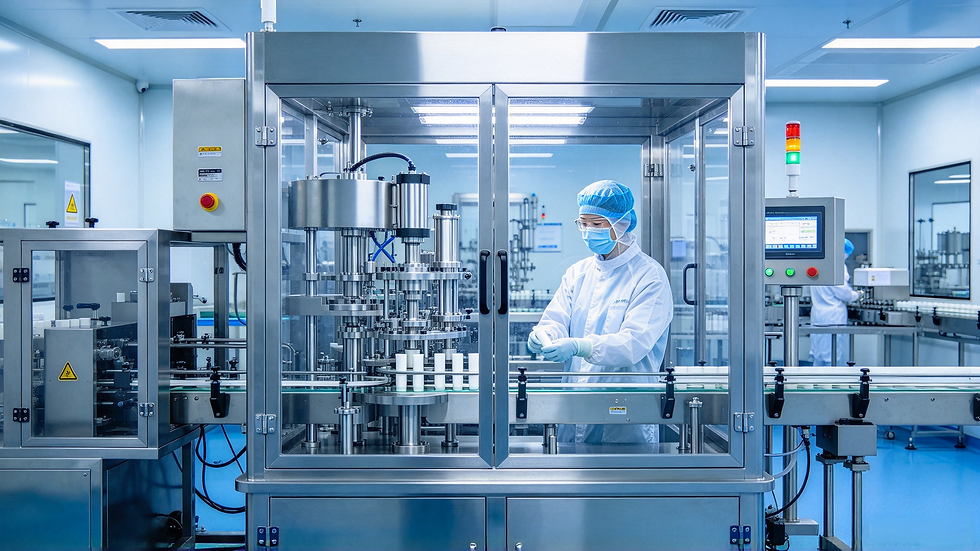
DEVA Skincare builds infant wash bases inside a system set up for this work. Four plants hold 100,000-grade GMPC cleanrooms, and the core laboratory is built to CNAS standards. The test menu holds 150 efficacy and safety protocols, including the CAM irritation test, cell efficacy and toxicity work, and preservative challenge testing, across 72 inspection and process control steps. Six laboratories cover cell testing, efficacy evaluation with VISIA imaging on 12 skin indicators, plant extraction and fermentation, active analysis by HPLC, GC and UV-Vis, packaging tests with xenon arc ageing, and heavy metal detection. R&D works from 5,000 formulas, with 70 granted patents and 17 more under examination. The ingredient library also reaches into the Shennongjia base, where 2,000 acres of herbs support seven extracts and one raw material already registered as a national new cosmetic ingredient. One amino acid foam cleanser ships 13 million units a year. The standard minimum order is 5,000 units.
You are developing a baby wash, baby shampoo, foam cleanser or baby body wash. Send the brief through the enquiry form on this page. We will propose two or three surfactant architectures for your tear-free baby wash, with the foam target, the pH window and the cost line shown side by side. We will also state which eye irritation data your claim needs before you commit to packaging. Sampling takes one week, and mass production takes six weeks after sample approval.
What makes a baby wash tear-free?
Two things: mild surfactants and a pH close to tears. Tear film pH runs between 7.0 and 7.4, and small anionic monomers sting the corneal nerves fastest. A tear-free wash uses larger, milder molecules such as glucosides, amino acid surfactants and sulfosuccinates. It keeps the active level low and blends two or three families to cut the free monomer.
Are glucosides milder than amino acid surfactants?
Not clearly. Both sit in the mildest band used in infant cleansers, and the gap between them is smaller than the gap between either one and a sulfate. Glucosides irritate a little less on some skin panels. Amino acid surfactants leave a better after-feel. Foam separates them far more than mildness does.
Can a sulfosuccinate system foam well enough for a baby wash?
Not on its own. Sulfosuccinates foam low and the bubbles drain quickly, so they work as a co-surfactant at 10% to 30% of the blend. Paired with a glucoside or an amino acid primary, the system reaches the foam volume consumers expect. It also keeps the low eye irritation that made the sulfosuccinate worth adding.
What pH should a tear-free baby wash have?
Tears sit between pH 7.0 and 7.4, while infant skin prefers about 5.5. A wash near pH 6.5 to 7.0 balances both targets and keeps glucosides and sulfosuccinates inside a stable window. A wash at pH 5.5 suits the acid mantle and can sting more on contact. Test both before you fix the claim.
How do you test eye irritation without animals?
Use the OECD in vitro battery. TG 492 uses a reconstructed human cornea-like epithelium and identifies materials that need no eye irritation classification. TG 491, TG 437 and TG 438 cover the other screening routes. HET-CAM is a common surfactant screen, not an OECD guideline. Human eye area data closes a tear-free claim.
Is a tear-free claim regulated?
Not as a defined term. In the European Union it falls under Article 20 of Regulation (EC) No 1223/2009 and the six common criteria of Commission Regulation (EU) No 655/2013. It needs adequate, verifiable evidence filed in the product information file. China goes further: T/SHRH 065-2025, effective from 30 July 2025, requires a consumer test or a human trial.
What is the minimum order and lead time?
The standard minimum order for a baby wash is 5,000 units. Aluminium cans start at 10,000 units, and masks and ampoules sit higher. Sampling takes one week. Mass production takes six weeks after sample approval. Each test block, such as eye irritation, a 28-day human panel or a preservative challenge, runs about four weeks.
Comments