Preventing the "Rancidity" Risk in Fermented Face Creams: Synergistic Inhibition Strategies for Lipid Oxidation and Microbial Metabolic Byproducts

Updated: Sep 17
I. Introduction: The High-Stakes Game of Fermented Beauty Stability
In the global premium skincare market, "Fermentation Beauty" has become the preferred track for brands building core blockbuster products, thanks to its outstanding skin affinity and multi-dimensional repair efficacy. From Bifida Ferment Lysate to Lactobacillus Ferment Filtrate, these actives rich in amino acids, peptides, and organic acids bring remarkable rejuvenation effects to the skin.
However, for brand owners seeking OEM/ODM manufacturing, the development of fermented face creams often comes with extremely high technical risks. Many products have experienced "rancidity" phenomena in market feedback—discoloration, off-odors, or even texture separation. As a professional OEM/ODM factory deeply rooted in cosmetic R&D and manufacturing, we know that stability control for fermented creams is never as simple as adding preservatives; it is a systematic engineering battle against lipid peroxidation and microbial metabolic byproducts. Today, starting from the underlying logic of formulation chemistry and microbiology, we will deeply deconstruct how to build synergistic inhibition strategies, helping you create the ultimate stable fermented face cream.
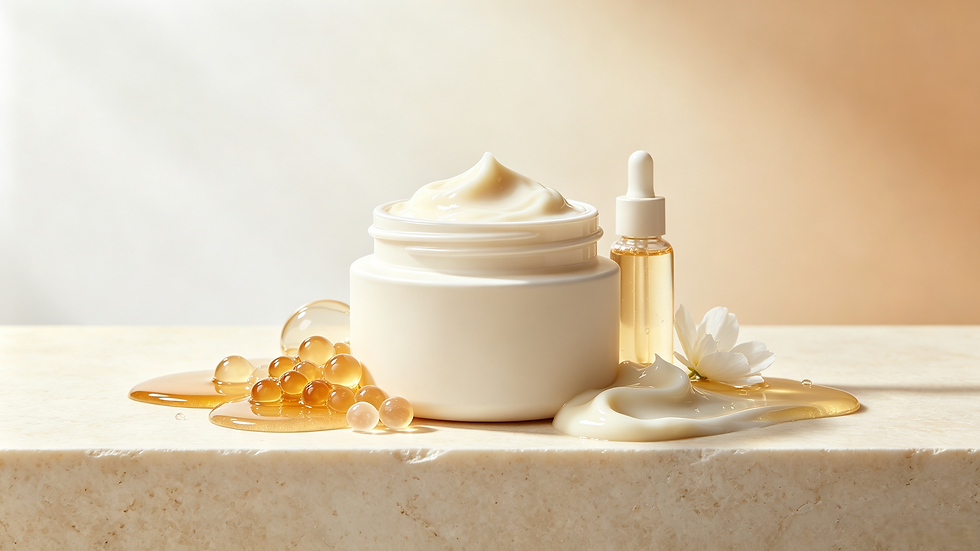
II. Deconstructing the "Rancidity" Double-Edged Sword: The Vicious Cycle of Lipid Peroxidation and Microbial Metabolism
To thoroughly solve the rancidity problem in fermented creams, one must first clarify the dual destructive mechanisms behind it. The formulation system of fermented creams is typically a complex "nutrient reservoir," making it highly susceptible to falling into the vicious cycle of lipid oxidation and microbial metabolism.
Chemical Rancidity: Lipid Peroxidation
On one hand, the reducing sugars, amino acids, and plant oils or ceramides introduced in the formulation contained in ferment filtrates provide a breeding ground for lipid peroxidation. Catalyzed by light, heat, or trace metal ions, unsaturated fatty acids undergo free radical chain reactions, generating hydroperoxides, which further decompose into small-molecule aldehydes and ketones such as Malondialdehyde (MDA) and 4-Hydroxynonenal (4-HNE). These substances not only produce a pungent "rancid odor" but are also the culprits triggering skin inflammation and accelerating aging.
Biological Rancidity: Microbial Metabolic Byproducts
On the other hand, the complex microecology carried by the fermentation raw materials themselves, along with the rich nutrients in the formulation, make the product extremely sensitive to microbial contamination. Even if the preservation system meets standards, trace tolerant bacteria metabolizing under suitable conditions will produce organic acids (causing abnormal pH drops), biogenic amines, endotoxins, and other byproducts. These metabolites not only destroy the stability of the emulsion system but also undergo cross-linking reactions with lipid oxidation products, accelerating the overall "rancidity" and discoloration of the product.
Against the backdrop of increasingly stringent requirements for cosmetic safety and stability under the EU EC 1223/2009 Regulation and the US MoCRA Act, this dual risk is a compliance and quality red line that brand owners must cross.
III. Antioxidant Network Reconstruction: Cutting Free Radical Chain Reactions and Metal Ion Catalysis
Addressing the core pain point of lipid peroxidation, our formulation design for fermented creams has completely abandoned the traditional approach of relying solely on basic antioxidants (such as simply adding BHT or tocopherol), instead building a three-dimensional antioxidant network of "water-oil biphasic + metal ion passivation."
Water-Oil Biphasic Antioxidant Matrix
Aqueous Phase: We introduce Ergothioneine and specific ascorbic acid derivatives. Ergothioneine not only possesses extreme free radical scavenging ability, but its unique cellular transporter (OCTN1) mechanism can penetrate deep into cell mitochondria, blocking oxidative stress at the source.
Oil Phase: We adopt a compound of natural tocopherols and rosemary leaf extract, utilizing their synergistic effect to efficiently capture lipid free radicals.
Metal Ion Passivation (The Fenton Reaction Blocker)
More critically, trace transition metal ions like iron and copper in the fermentation system are the "invisible killers" catalyzing lipid oxidation (i.e., the Fenton Reaction). To this end, our factory precisely introduces Sodium Phytate into the formula as a gentle metal ion chelator. Sodium Phytate can effectively passivate these free metal ions, cutting the catalytic chain of oxidation reactions, while its macromolecular structure does not interfere with the biological activity of the fermentation actives.
This multi-dimensional antioxidant network reconstruction fundamentally curbs the generation of lipid peroxidation products at the chemical foundation, ensuring the cream's odor and color stability throughout its shelf life.
IV. Microbiome Preservation & Source Control: Inhibiting the Generation of Harmful Metabolic Byproducts
If the antioxidant network solves "chemical rancidity," then microbiome preservation directly strikes at the heart of "biological rancidity." The preservation design for fermented creams must achieve precise inhibition of harmful microorganisms without destroying the efficacy of the fermentation actives.
Source Control
At the raw material source, our factory executes extremely stringent incoming inspections for every batch of fermentation filtrate/extract, and adopts advanced aseptic membrane filtration or gentle irradiation sterilization technology to minimize the initial total colony count, cutting the contamination chain at the source.
Preservation System Construction
In building the preservation system, we avoid using traditional nutritional preservatives that are easily utilized by microorganisms as carbon sources, instead adopting the "Polyol Synergy + Bio-Antimicrobial Peptides" preservative-free concept. By compounding humectants with broad-spectrum bacteriostatic effects like 1,2-Pentanediol and Caprylyl Glycol, paired with specific Lactobacillus fermentation metabolites (antimicrobial peptides), we can effectively inhibit the reproduction of bacteria and molds without altering the microecological balance of the fermentation system.
According to international standard cosmetic preservation efficacy tests (ISO 11930 / USP <51>), our optimized fermented cream formulations perfectly pass Criteria A after inoculation with five standard strains, ensuring that during consumer use after opening, no harmful byproducts are produced due to microbial metabolism.
V. Process Barriers & Packaging Synergy: The Closed Loop from Production Environment to Terminal Freshness Lock
No matter how perfect the formulation design, without extreme production processes and packaging synergy, the stability of fermented creams still cannot be guaranteed. Fermentation actives are extremely sensitive to oxygen, moisture, and light in the environment, requiring the OEM factory to possess full-chain quality control capabilities.
Production Environment Control
In the production phase, we implement strict Dew Point Control in the emulsification and filling workshops for fermented creams. By controlling the relative humidity in core areas to extremely low levels and adopting closed vacuum homogenization emulsification processes, we minimize oxygen mixing and microbial aerosol contamination during production.
Packaging Synergy
In packaging selection, we mandate that fermented creams use airless pumps with high oxygen barrier layers (such as EVOH material) or light-proof sealed bottles. This packaging design not only eliminates air backflow and cross-contamination during consumer use but also cuts the penetration path of UV and oxygen into the cream base through physical barriers, creating a "hibernation chamber" for fermentation actives and lipid components, reducing rancidity risk to a minimum.
VI. Fermented Face Cream Conclusion
Preventing the "rancidity" risk in fermented face creams is a comprehensive exam of an OEM factory's formulation chemistry, microbiology, and precision manufacturing capabilities. In the fiercely competitive global skincare market of 2026, only by pushing the antioxidant network, microbiome preservation, and full-chain quality control to the extreme can brands deliver truly safe and highly efficacious fermented skincare masterpieces to consumers.
Building a line like this? Start with the factory, not the formula.
Most launches slip because formulation and manufacturing were scoped as two separate projects. We scope them together — target consumer, regulatory market and landed unit cost decided before sampling starts.
That is how a concept reaches compliant, repeatable production without a mid-project supplier change.
By collaborating with Explore our skincare manufacturing capabilities you gain access to industry-leading expertise and innovative formulations that set your brand apart in the competitive global market. Tell us your launch window and target market — we will tell you what is realistic, and what is not.


Comments