Root Cause Investigation of "Eye Irritation": The Combined Impact of Surfactant Concentration / pH / Preservatives / Fragrance

Updated: Sep 17
I. "Eye Irritation" Complaints: Formulation Issue or Usage Issue?
When receiving feedback from clients or end consumers that "the makeup remover stings the eyes," the first reaction is often to suspect that the application technique is too harsh, or that the consumer's eyes are inherently sensitive. However, in actual formulation practice, the root cause of eye irritation can mostly be traced back to the formulation itself—and it is rarely a single-ingredient issue, but rather a multi-factorial synergistic effect.
Excessively high surfactant concentration, pH deviation from the physiological range, improper preservative selection, and exceeding limits of fragrance allergens—a problem in any of these four dimensions can trigger ocular discomfort. If two or more issues coexist, the irritation will superimpose in a non-linear manner, far exceeding the simple sum of the individual factors.
Researchers conducted a systematic ocular irritation assessment on 39 common raw materials used in baby wash products (including 31 surfactants, 3 preservatives, 4 fragrances, and 1 humectant) at actual formulation usage concentrations and pH levels via the Draize rabbit eye test. The results clearly demonstrated that ingredient type, concentration, and formulation pH collectively determine the final degree of eye irritation.
This is the core proposition this article aims to deconstruct: How to systematically investigate the root cause of "eye irritation" in makeup removers like an experienced formulation engineer?
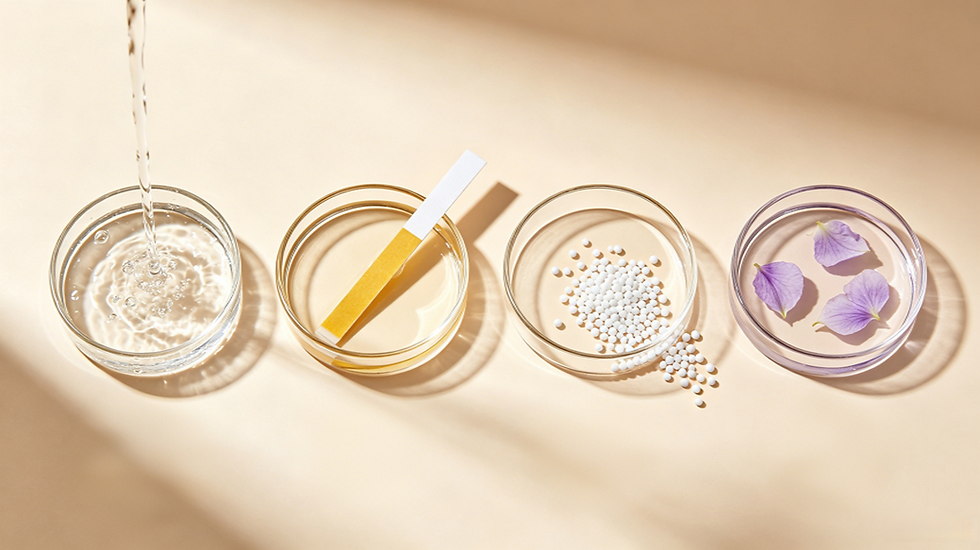
II. Root Cause 1: Surfactants — The Dual Impact of Concentration and Type
Surfactants are the core ingredients that enable the cleansing efficacy of makeup removers, and they are also the most common direct triggers of eye irritation. Their irritation mechanism lies in the fact that surfactant molecules can disrupt the lipid bilayer of conjunctival epithelial cells. When the concentration exceeds a certain critical value (usually related to its CMC - Critical Micelle Concentration), the concentration of free monomers rises, and the proteolytic effect on mucosal tissues significantly increases.
The ocular irritation of different types of surfactants varies significantly. Ranked from highest to lowest irritation, the general order is: Anionic > Cationic > Amphoteric ≈ Non-ionic
In the systematic study on baby wash products, anionic surfactants were tested 18 times, involving 14 different structures. Among them, 3 were moderately irritating, 6 were mildly irritating, and 9 were non-irritating. Most of the 7 amino acid salt anionic surfactants showed no or mild irritation; Sodium Lauroyl Sarcosinate (5%) was judged as moderately irritating; sulfonate and carboxylate anionic surfactants showed no irritation within the tested concentration range of 1.44–3%.
Two key conclusions have direct guiding significance for formulation engineers:
Concentration matters more than type: For the same surfactant, the irritation level can jump from "non-irritating" to "moderately irritating" depending on the concentration. This means controlling the total surfactant concentration is more important than choosing a specific surfactant. The total surfactant concentration in makeup removers is recommended to be controlled within 3–8%. If it exceeds 10%, specialized ophthalmological tolerance testing is required.
"Synergistic Irritation" in compounding: When two anionic surfactants are combined, charge aggregation may interfere with normal micelle formation, leading to an increased concentration of free surfactant monomers in the solution. Consequently, the irritation of the compounded system can sometimes be higher than when each component is used alone—a "synergistic irritation" phenomenon easily overlooked by formulators.
III. Root Cause 2: pH Value — The Most Easily Overlooked Irritation Trigger
pH value is the "invisible red line" for eye safety, and its importance sometimes even surpasses the ingredients themselves.
The pH of normal human tear fluid is approximately 7.0–7.4 (slightly alkaline), and the conjunctival and corneal epithelial cells are extremely sensitive to pH deviations:
pH < 5.5: High degree of protonation irritates corneal epithelial cell proteins, triggering an obvious burning sensation.
pH > 8.0: Alkalinity destroys corneal surface proteins, causing a saponification-like irritation.
Optimal Safety Zone: pH 6.5–7.5, matching the buffering capacity of tear fluid.
From the regulatory framework of China's NMPA, the use of surfactants in cleansing product formulation systems greatly affects the product's pH: soap-based cleansing products typically have a pH of 9.5–12.5, which is a high-risk zone for eye irritation; weakly acidic cleansing products based on amino acid surfactants usually have a pH of 6–7, and their ocular safety is significantly superior to soap-based systems.
The combined irritation effect of pH and surfactants is particularly worthy of attention: some surfactants that are mild at neutral pH exhibit stronger ocular mucosal irritation in low-pH environments (e.g., 4.5); in high-pH environments, even anionic surfactants at low concentrations will have their irritation amplified. This means: designing a formulation based solely on the safety data of single ingredients while ignoring the overall pH design is a systemic formulation risk.
IV. Root Cause 3: Preservatives — The Narrow Path Between Efficacy and Safety
Preservatives are necessary to ensure the microbiological safety of the product, but in eye-area application scenarios, the selection of preservatives must be exceptionally cautious because the conjunctival epithelium has a much lower tolerance for preservatives than facial skin.
Methylisothiazolinone (MIT) — Now a Regulatory Red Line
MIT is a preservative used to prevent the growth of bacteria and fungi. Its side effects include skin irritation, allergic reactions, eye irritation, and potential respiratory issues when inhaled.
The EU passed Regulation EC 2017/1224 in 2017, completely banning MIT in leave-on cosmetics and strictly limiting its maximum concentration in rinse-off products to 15 ppm (0.0015%)—at this concentration, MIT practically lacks effective bacteriostatic activity, meaning this restriction essentially excludes it from formulation preservation systems.
Conclusion: For makeup removers targeting the EU market, MIT cannot be used for preservation purposes; for other markets like China and Southeast Asia, it should also be prudently evaluated, and proactive substitution is recommended.
Phenoxyethanol — Dosage Control is Key
Phenoxyethanol is currently one of the most commonly used alternative preservatives with generally good overall safety. However, researchers point out that isothiazolinone preservatives, used to replace parabens, have stronger sensitization potential than parabens; meanwhile, phenoxyethanol is currently undergoing re-evaluation by the EU SCCS. In eye makeup remover formulations, the recommended dosage of phenoxyethanol should be controlled at ≤0.5% (rather than the standard 1%) to reduce the risk of ocular mucosal irritation.
Recommended Mild Preservation Alternative Strategy
For sensitive skin or eye-specific makeup removers, a "Polyol Synergistic Preservation" scheme can be adopted:
Ingredient | Dosage | Synergistic Mechanism |
Pentylene Glycol | 2–3% | Lowers water activity, synergistically enhances preservation. |
Ethylhexylglycerin | 0.3–0.5% | Disrupts microbial cell membranes, synergistic preservation. |
Caprylyl Glycol | 0.5% | When combined with phenoxyethanol, can reduce the latter's required dosage to 0.3%. |
V. Root Cause 4: Fragrance — The Most "Hidden" Allergen and Irritant
Fragrance is the raw material category that should be handled with the utmost caution in eye makeup removers, for two reasons: first, there are numerous allergenic monomers in fragrances, often added as complex mixtures; each may be compliant individually but exceeds thresholds when compounded; second, allergic reactions are cumulative and have a "memory" effect—consumers may show no symptoms upon first use, but a clear reaction may be triggered after multiple exposures.
EU Fragrance Allergen Regulation: Fully Effective July 31, 2026
Through Regulation EU 2023/1545, the EU has expanded the list of fragrance allergens requiring mandatory labeling in cosmetics from 26 to a total of 82. From July 31, 2026, all newly launched products must comply with the updated labeling requirements; the compliance deadline for existing products is July 31, 2028.
Specifically, when a declarable fragrance allergen exceeds a concentration of 0.001% in leave-on products, or 0.01% in rinse-off products, its INCI name must be individually listed in the ingredient list.
The EU regulatory document itself explicitly states that the estimated proportion of the EU population allergic to fragrance allergens is between 1–9%; for consumers who have already been sensitized, even extremely low concentrations far below the labeling threshold are sufficient to trigger allergic symptoms.
Practical Advice for Eye Makeup Removers
For mainstream international markets like the EU and North America, eye makeup removers should follow these principles:
Prioritize Fragrance-Free Formulations: Fundamentally eliminate the risk of fragrance allergens, which is also the mainstream direction of the professional eye care market in recent years.
If Fragrance Must Be Added: The actual concentrations of the 82 EU-listed allergens in the finished product must be checked one by one, entrusting a third-party laboratory with HPLC capabilities for quantitative testing.
Avoid High-Risk Fragrance Ingredients: Linalool, Limonene, and Geraniol are already the most frequently detected exceeding standard ingredients in the EU expanded list; they must be strictly controlled in eye products.
VI. How Professional OEM/ODM Factories Assume Responsibility for "Eye Safety"
Once a complaint of "eye irritation" reaches the consumer level, its lethality to the brand far exceeds other skin feel issues. The latest review emphasizes that fragrance contact allergies remain highly prevalent, and patch testing is the gold standard for confirming the causative allergen; the impending full enforcement of the new EU fragrance regulations will help protect consumers from cosmetic-induced fragrance contact allergies.
This means that a truly professional OEM/ODM factory must not only be able to design formulations but also provide brand owners with a complete Eye Safety Technical Dossier—including surfactant screening rationale, pH design logic, preservative system compliance proof, and fragrance allergen testing reports.
Does your formulator treat surfactant as a system, not a line item?
surfactant rarely fails on its own — it fails against the rest of the system: pH, emulsifier, preservative and packaging. We assess it in context, before it costs you a sampling round.
Our R&D group works from a formulation platform that maps compatibility ahead of prototyping, which shortens the loop between brief and stable sample.
By collaborating with Explore our formulation and R&D capability you gain access to industry-leading expertise and innovative formulations that set your brand apart in the competitive global market. Send your target actives and claims; we will flag the compatibility risks before any sample is made.


Comments