Value Ranking of Oil-Control & Anti-Acne Ingredients: Salicylic Acid vs. Azelaic Acid vs. Mandelic Acid vs. Zinc PCA

Updated: Sep 17
Why Is the "Acne-Fighting" Track Moving Away from Harsh Acid Peeling?
Oil control and acne treatment represent the most widely targeted and deeply painful categories in the skincare market. Over the past few years, the market has been flooded with marketing gimmicks of "high-concentration potent ingredients"—but after experiencing peeling, redness, and barrier damage, consumers are awakening and seeking more scientific solutions. Salicylic Acid, Azelaic Acid, Mandelic Acid, and Zinc PCA: these four mainstream oil-control & anti-acne ingredients occupy the core of almost all products for oily-acne skin. But which one is the true weapon that can balance "acne clearing" and "barrier stabilization"? This article provides an in-depth evaluation of these four ingredients from four dimensions: mechanism of action, efficacy pathway, formulation barriers, and cost structure, offering you a clear and systematic supply chain and formulation value comparison.
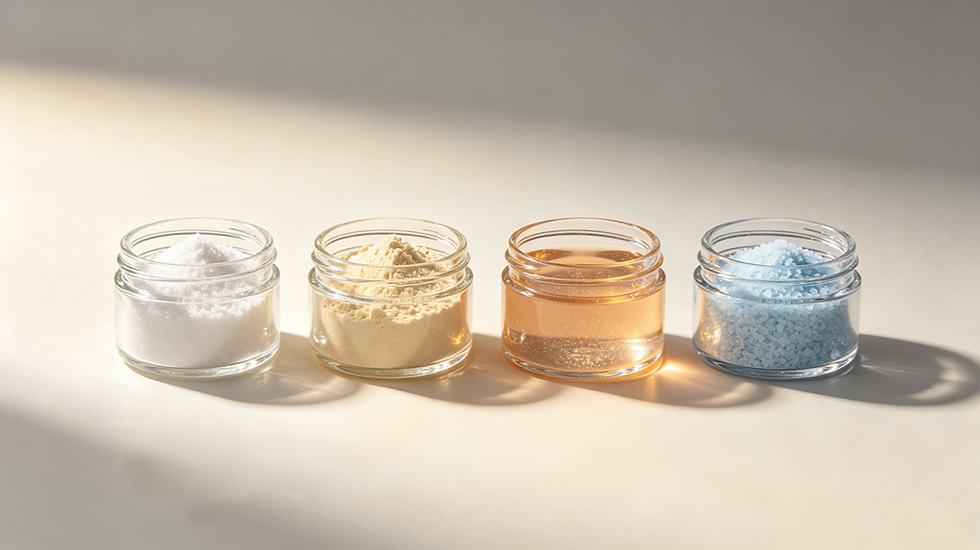
1: Salicylic Acid (BHA) — The Lipid-Soluble "Drain Cleaner" That Penetrates Deep, Classic and Irreplaceable
Why Ranked First?
Salicylic acid is the "evergreen tree" of the anti-acne world and currently the only widely recognized lipid-soluble organic acid. Among all anti-acne ingredients, it is the only one that can truly penetrate the sebum film and dive deep into the pores for a "thorough cleanup."
Mechanism of Action
Thanks to its lipophilic nature, salicylic acid can follow the sebaceous glands deep into pores, dissolving clogged lipids and aged keratin (acting as a keratolytic). Meanwhile, it possesses anti-inflammatory properties structurally similar to aspirin, rapidly subsiding red, swollen acne. Additionally, low-concentration salicylic acid can bidirectionally regulate keratin metabolism, preventing the formation of microcomedones.
Clinical Data
Multiple double-blind studies in the Journal of Dermatologic Surgery confirm that after 8 consecutive weeks of using salicylic acid products at 0.5%-2% concentration with a pH between 3.0-4.0, subjects' non-inflammatory comedones (closed comedones/blackheads) decreased by an average of 45%-58%, and inflammatory papules decreased by over 30%.
Value Assessment
Advantages: The "gold standard" for pore unclogging, with immediate effects on blackheads, whiteheads, and closed comedones; combines anti-inflammatory and mild exfoliating effects; extremely mature raw material with low supply chain costs.
Disadvantages: The formulation barrier lies in "crystallization and irritation." Salicylic acid is highly prone to crystallize and precipitate in water-based formulations, requiring contract manufacturers to use alcohol solubilization, polyol compounding, or supramolecular encapsulation technologies to ensure stability; it has a certain level of irritation, easily causing peeling on dry/sensitive skin; strictly limited by global regulations (e.g., maximum 2% for leave-on products in China).
Most Suitable For:
Typical oily skin, frequent blackhead/closed comedone sufferers, tolerant oily-acne skin.
2: Azelaic Acid — The "Dual-Action Specialist" for Antibacterial & Redness Reduction, The Formulator's Nightmare & The Consumer's Miracle Cure
What Is It?
Azelaic acid naturally exists in grains like wheat and rye. Originally used to treat rosacea, it later became a prescription-grade ingredient for dermatologists treating inflammatory acne and acne marks due to its exceptional anti-acne and melanin-inhibiting capabilities.
Mechanism of Action
Azelaic acid follows a "antibacterial + melanin-inhibiting + anti-inflammatory" triple-action route. It can directly penetrate bacterial cell membranes, inhibiting Cutibacterium acnes protein synthesis; meanwhile, it is a potent competitive inhibitor of tyrosinase, precisely blocking the generation of Post-Inflammatory Hyperpigmentation (PIH, i.e., dark acne marks); additionally, it scavenges free radicals, alleviating local inflammatory responses.
Clinical Data
Clinical dermatological data shows that using 15%-20% concentration azelaic acid gel for 12 consecutive weeks achieves an improvement rate for inflammatory acne comparable to 0.05% tretinoin, but with significantly lower irritation. More crucially, in preventing and treating red/dark acne marks, the azelaic acid group reduced the pigmentation area by over 40% compared to the control group.
Value Assessment
Advantages: Achieves acne clearing and acne mark prevention in one step, the only special-effect ingredient for solving the "dark marks right after acne calms down" pain point; non-photosensitizing, suitable for AM/PM use; does not induce antibiotic resistance; pregnancy-safe.
Disadvantages: Extremely high B-side formulation barriers (truly a formulator's nightmare). Azelaic acid is extremely difficult to dissolve in both water and oil; high-concentration formulations are highly prone to severe pilling, white cast, and rough skin feel; achieving effective concentrations (above 10%) poses a hell-level test for contract manufacturers' solubilization technologies, suspension systems, and skin-feel modification capabilities.
Most Suitable For:
Red, swollen inflammatory acne skin, rosacea patients, those highly prone to dark acne marks, and pregnancy-safe acne-fighting demographics.
3: Mandelic Acid — The Lipophilic Macromolecule "Surface Polisher", The New Darling of Gentle Resurfacing
What Is It?
Mandelic acid belongs to the Alpha Hydroxy Acid (AHA) family, but it is the only lipophilic macromolecular AHA extracted from bitter almonds. Its emergence perfectly fills the market gap of "salicylic acid is too irritating, traditional AHAs are not lipophilic."
Mechanism of Action
With a molecular weight of 152.14, mandelic acid is far larger than glycolic acid (76.05), making its penetration speed on the skin surface extremely slow and uniform, preventing instant epidermal puncture that causes severe stinging. Meanwhile, due to its lipophilic group (benzene ring), it can better integrate with sebum than traditional water-soluble AHAs, gently loosening desmosomes between epidermal keratinocytes to achieve "surface polishing."
Clinical Data
An 8-week clinical test targeting Asian sensitive oily-acne skin showed that after using a 10% mandelic acid serum, subjects' epidermal roughness scores decreased by 38%, superficial closed comedones decreased by 25%, and TEWL (Transepidermal Water Loss) barely increased, proving it completed keratin metabolism without damaging the physical barrier.
Value Assessment
Advantages: Extremely gentle, the best entry-level choice for "acid-peeling beginners" and "sensitive acne skin"; combines oil-control, brightening, and skin-refining effects; does not require strict light avoidance, suitable for daytime use (with sunscreen).
Disadvantages: Due to its large molecular weight and slow penetration, it can only act on the superficial epidermis, having minimal effect on deep cystic acne or stubborn deep closed comedones; relatively slow to take effect, requiring long-term consistent use.
Most Suitable For:
Sensitive oily-acne skin, beginners trying acid resurfacing for the first time, and demographics with dull skin tone accompanied by superficial rough closed comedones.
4: Zinc PCA — The "Logistics Hub" for Source Oil-Control & Microbiome, The Non-Acid Stabilization Weapon
What Is It?
Zinc PCA is a complex of Pyrrolidone Carboxylic Acid (PCA, an important component of the skin's Natural Moisturizing Factor NMF) and zinc ions. It has become a core star ingredient under the recent "acid-free oil control" and "microbiome skincare" trends.
Mechanism of Action
Unlike acids that "clean up afterwards," Zinc PCA follows a "source interception" route. It can effectively inhibit 5α-reductase activity, reducing excessive sebaceous gland secretion at the gene expression level. Meanwhile, zinc ions have broad-spectrum bacteriostatic effects, inhibiting the imbalance of Cutibacterium acnes and Staphylococcus epidermidis, regulating the skin microbiome; the PCA portion provides excellent moisturizing capacity, preventing post-oil-control dehydration.
Clinical Data
In vitro and human tests show that with just 1% concentration of Zinc PCA, after 28 consecutive days of use, subjects' facial sebum secretion rate decreased by an average of 24.5%, and the proportion of harmful bacteria on the skin surface significantly decreased, restoring a healthy microbiome. Its oil-control effect is long-lasting and accompanied by zero peeling or stinging reactions.
Value Assessment
Advantages: Zero irritation, non-photosensitizing, no pH adjustment required, excellent formulation compatibility; reduces oil production at the source, avoiding the vicious cycle of "the more you control, the oilier it gets"; balances moisturizing and bacteriostasis, perfectly aligning with skincare concepts for "oily-dehydrated skin" and "microbiome imbalance."
Disadvantages: Weak standalone bactericidal and exfoliating capabilities, unable to quickly dissolve existing stubborn comedones like acids; relatively slow to take effect, typically requiring over 4 weeks to see a noticeable reduction in oil production; must be compounded with acids or antimicrobial peptides to form a complete anti-acne closed loop.
Most Suitable For:
Oily-dehydrated skin, sensitive oily skin, demographics long plagued by oil production but intolerant to acids, and daily long-term oil control & maintenance.
Conclusion on Oil-Control & Anti-Acne Ingredients
These four ingredients play distinctly different roles in the battle against oily acne: Salicylic Acid is the "drain cleaner," diving deep into pores to dissolve oily debris; Azelaic Acid is the "combat medic," precisely clearing acne mark mines while killing bacteria and extinguishing inflammation; Mandelic Acid is the "surface polisher," gently exfoliating superficial roughness and brightening skin tone; and Zinc PCA is the "logistics hub," shutting down excessive sebaceous gland production at the source while maintaining microbiome balance.
The true trend defining the 2026 oil-control & anti-acne market is not the "violent exfoliation of single high-concentration acids" but rather 3D multi-dimensional microbiome management combining "lipid-soluble unclogging + lipophilic gentle metabolism + non-acid source oil-control." Current cutting-edge formulations have abandoned the single "potent ingredient" mindset, instead achieving acne clearing without barrier damage through scientific compounding matrices (such as "supramolecular salicylic acid + Zinc PCA" or "mandelic acid + azelaic acid derivatives"). Understanding the penetration boundaries and formulation barriers of each ingredient is the underlying logic for creating high-repurchase-rate anti-acne blockbusters.
The claim on the label has to survive the stability test.
Brands specify salicylic for the story, then discover the story does not hold at month 24. We select the delivery system and the preservative compatibility together, so the claim is still true when the product is on shelf.
That is the gap between a marketing concept and a sellable formula — and it is closed in R&D, not in QC.
By collaborating with Explore our formulation and R&D capability you gain access to industry-leading expertise and innovative formulations that set your brand apart in the competitive global market. Tell us the claim and the target market; we will tell you what is achievable and what it costs.


Comments