What Makes 0-3 Month Skin Structurally Different From Adult Skin?

0-3 month skin carries a stratum corneum about 30 percent thinner than an adult's at the same body site. The ceramide pool behind it is smaller too. A formula built for a two-year-old therefore lands harder on a two-week-old. The same gram of product meets less barrier over more surface area per kilogram.
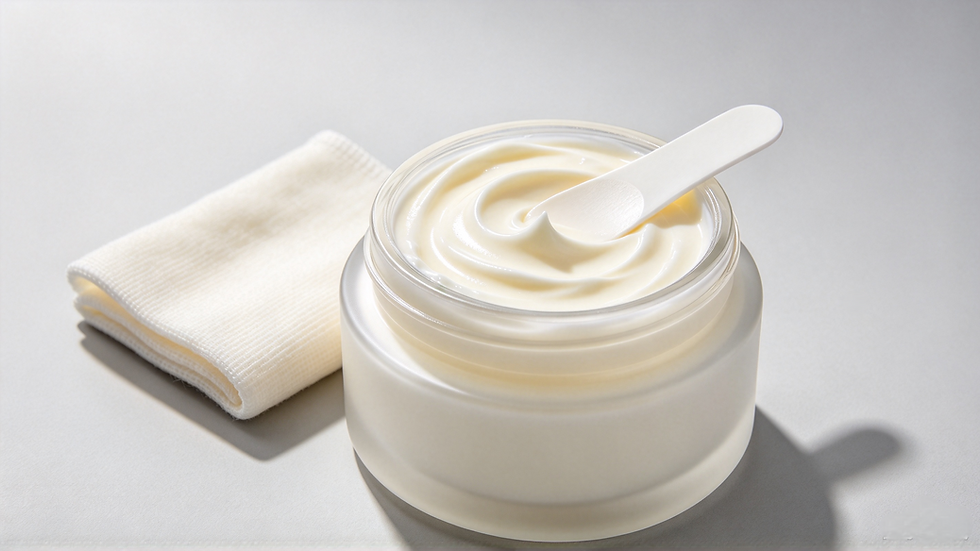
The outer layer is thinner and the ceramide pool is smaller
Infant corneocytes measure roughly 20 percent smaller than adult corneocytes. The same square centimetre of skin holds more cells and more cell boundaries. Every boundary is a route for water leaving, and for anything dissolved in that water entering. Neonatal stratum corneum also carries less total ceramide. The profile shifts away from the long-chain ceramides that hold the lamellar sheets in order. Fewer long-chain ceramides mean looser lipid packing, and looser packing shows up as higher transepidermal water loss.
Full-term infants run elevated TEWL in the first days of life. The value settles toward adult levels over the first month. Preterm infants settle later. Natural moisturizing factor follows the same curve. Infant stratum corneum holds less NMF. Water-binding capacity inside the corneocyte is therefore lower while the lipid barrier is still under construction.
Vernix caseosa covers a newborn at birth and carries antimicrobial peptides along with water and lipids. It comes off in the first days. The skin underneath then has to take over with a thinner stratum corneum and a smaller ceramide reserve. A formula does not replace vernix. It avoids making the handover harder. That rules out added fragrance, drying solvents and alkaline builders in the first month.
Surface area per kilogram is two to three times higher
A 3.5 kg newborn carries about 0.25 square metres of skin, which is 0.07 square metres per kilogram. A 70 kg adult carries about 1.8 square metres, or 0.026 square metres per kilogram. The ratio sits between 2.5 and 3.
That arithmetic is about dosing, not chemistry. Apply 2 mg per square centimetre to both bodies. The infant then receives 2.5 to 3 times more material per kilogram. A 0-3 month formula is not a diluted adult lotion. It is a different product, with a lower actives ceiling, a narrower preservative system and a stricter raw material list.
Table 1. Structural differences that change a formula
Parameter | 0-3 months | Adult | What it changes in the formula |
Stratum corneum thickness | about 30 percent thinner | reference | lower actives load, thinner emollient film |
Corneocyte size | about 20 percent smaller | reference | more cell boundaries, faster water loss |
Total ceramide | below adult level, less ceramide 1 | reference | ceramide with cholesterol and fatty acid near 1:1:1 |
Natural moisturizing factor | lower | reference | glycerin and amino acid humectants carry more load |
Surface pH | 6.3 to 7.5 at birth, near 5.0 by week four | 4.7 to 5.5 | buffer to 4.8 to 5.2, avoid alkaline builders |
TEWL | elevated in the first weeks | stable | occlusive plus lamellar lipid, not humectant alone |
Surface area per kilogram | 0.07 square metres | 0.026 square metres | dose per application drops, preservative load drops |
Sebum | low | variable | no sebum control actives |
Melanin activity | lower | reference | mineral-only UV filters where sunscreen is used |
Why Does Newborn Skin pH Sit Too High for a Mature Barrier?
A full-term newborn's skin surface sits between pH 6.3 and 7.5 at birth, and adult skin sits near pH 5.0. The gap closes over about four weeks in a term infant. Across that window, two enzyme systems that build and shed the barrier run at the wrong speed.
Two pH-dependent systems run in opposite directions
Beta-glucocerebrosidase converts glucosylceramide into ceramide and works best at pH 5.0 to 5.5. Acidic sphingomyelinase supplies a second ceramide route and prefers a similar range. Lift the surface pH and both enzymes slow down. Ceramide supply then falls at the moment the barrier needs it most.
Kallikrein-related peptidases 5 and 7 move the other way. They cleave corneodesmosomes and release corneocytes, and their activity rises as pH climbs toward neutral. A newborn already carries a thin stratum corneum. A high-pH wash raises the shedding rate while it lowers the ceramide supply. The two effects pull in the same direction.
The resident microbiome reads the same signal. Surface pH above 5.5 favours Staphylococcus aureus. pH below 5.5 favours the coagulase-negative staphylococci that keep the surface stable.
The acid mantle is assembled from three sources. Sebum lipids break into free fatty acids, sweat carries lactate and amino acids, and the resident bacteria release organic acids. None of those sources is mature in the first month. A wash that strips surface lipid removes one of the raw materials. The mantle then needs hours to rebuild what a single rinse took away.
The pH target belongs in the specification, not the label
An infant wash at pH 7 moves skin away from its own set point for hours after rinsing. A leave-on at pH 6 holds the surface off the enzyme optimum for hours. Infant cleansers and lotions belong at pH 4.8 to 5.2. Buffer the batch with citrate or lactate rather than pulling it down with a strong acid at the end. Alkaline builders that give a formula its rich feel in the lab work against the barrier in use.
Table 2. What a high-pH formula does to each pH-dependent system
Process | Enzyme or system | Works best at | What a high-pH formula does |
Ceramide generation | beta-glucocerebrosidase | pH 5.0 to 5.5 | slows the main ceramide route |
Ceramide generation | acidic sphingomyelinase | pH 5.0 | slows the second ceramide route |
Desquamation | KLK5 and KLK7 | neutral to slightly alkaline | speeds corneocyte shedding on a thin layer |
Microbial balance | resident staphylococci | pH below 5.5 | favours Staphylococcus aureus |
Buffer capacity | citrate or lactate | pH 4.8 to 5.2 | leaves the surface at the wrong pH for hours |
Why Does 0-3 Month Skin Absorb More of What You Apply?
Infant skin takes up a larger fraction of an applied substance than adult skin does per unit of area. Per kilogram of body weight, the gap widens further. Three clinical episodes from the past fifty years show the size of it.
Three cases where infant skin absorbed too much
Hexachlorophene bathing in newborn nurseries produced vacuolar encephalopathy in infants in the 1970s, and the practice stopped. Boric acid powder applied to damaged diaper skin caused seizures and deaths in infants. Aniline dye transferred from stamped diapers produced methemoglobinemia in newborns. Each substance passed the standards applied to adults at the time. None was safe for a body that absorbs a larger share of what lands on it.
The pattern repeats with anything that raises penetration on purpose. Penetration enhancers and high alcohol loads increase delivery most in the group that starts with the least barrier.
The diaper area concentrates every factor at once. Occlusion raises hydration and surface pH, urea converts to ammonia under urease-producing bacteria, and friction damages what barrier exists. A wipe or a cream for that area carries a higher exposure per square centimetre than a lotion for the arm. The pH target and the preservative ceiling matter more there than anywhere else on the body.
What higher absorption means for preservatives, solvents and fragrance
Preservatives protect the product, and their use levels were set against adult skin. Under three months, the same level produces more systemic exposure per kilogram. The argument therefore runs toward the narrowest system that still passes the challenge test, not the broadest one that fits the cost target.
Fragrance carries the same problem in a different shape. A fragrance blend delivers dozens of compounds onto skin that is still assembling its barrier. Some of those compounds are established contact allergens. Commission Regulation (EU) 2023/1545 adds 56 fragrance allergens to the EU declaration list from 31 July 2026 for products newly placed on the market. The change turns an invisible risk into a line of text on the pack. A 0-3 month formula is simpler to defend with no added fragrance. The label then carries no allergen list at all.
Alcohol denat and light solvents earn the same scrutiny. They flash off adult skin. On infant skin they remove what little surface lipid exists and leave the surface alkaline.
Which Ingredients Should a 0-3 Month Formula Leave Out?
The exclusion list for this age group is short. Every entry earns its place for one of three reasons: it raises penetration, it raises pH, or it adds allergen load that infant skin cannot buffer.
Table 3. Ingredient classes to keep out of a 0-3 month formula
Ingredient class | Why it matters under three months | What to use instead |
Added fragrance and essential oil blends | dozens of compounds, several contact allergens, and 56 more declarable allergens in the EU from 31 July 2026 | no added fragrance, control base odour through emulsifier choice |
Alcohol denat | strips surface lipid and leaves the surface alkaline | glycerin and propanediol at low load |
SLS and high-active anionic blends | removes lipid from an already thin stratum corneum | amino acid surfactants, isethionates, glucosides |
MIT and CMIT, formaldehyde releasers | sensitisers, the mixture is prohibited in EU leave-on products | sodium benzoate with potassium sorbate below pH 5.5, subject to challenge data |
Propylene glycol at high load | penetration enhancer with irritation reports | propanediol or glycerin |
Salicylic acid and AHA above 3 percent | exfoliation on immature skin, age labelling in several markets | none in 0-3 month SKUs |
Colourants and decorative pearlisers | no function on infant skin, extra sensitisation surface | none |
Two entries on that table are regulatory and the rest are arithmetic. The MIT and CMIT mixture is prohibited in leave-on products under Regulation (EC) No 1223/2009 Annex V. The single ingredient is capped at 0.0015 percent where it is allowed at all. Salicylic acid carries age labelling in several markets. The remaining rows come down to dose per kilogram. That is where a 0-3 month brief diverges from a body lotion brief.
How Is an Infant Formula Built Differently at the Bench?
Four decisions separate an infant formula from a body lotion at the same price point. They are the lipid phase, the pH system, the preservative system and the water.
The lipid phase follows the ceramide profile, not the marketing number
Petrolatum still earns its place as the occlusive. What changes is the ceramide work behind it. Ceramide 1 (EOS) or ceramide 3 (NP) at 0.1 to 0.5 percent gives the lamellar sheets material to rebuild with. Balance it with cholesterol and free fatty acids near a 1:1:1 molar ratio. A token ceramide at 0.01 percent with no cholesterol adds a claim and no structure.
pH 4.8 to 5.2, held by a buffer
Citrate and lactate buffers hold the range through filling and through shelf life. A batch pulled down with sodium hydroxide at the end drifts upward in the pack. The drift is largest in the first weeks after manufacture, when the product sits in a warehouse rather than on a changing table.
Buffer capacity is cheap to check and easy to skip. Titrate a sample against 0.1 M hydrochloric acid and watch how quickly pH falls. An unbuffered emulsion drops in the first millilitres. A citrate-buffered emulsion holds its range. That is what keeps the product inside the specification once it reaches skin and dilutes with sweat.
The preservative system is chosen by challenge test, then trimmed
The sequence matters. Run the challenge test first, find the smallest system that holds, then run the irritation panel on that system. A broad-spectrum blend passes the challenge and adds sensitisers a 0-3 month product does not need. Trimming after the challenge costs one extra test cycle. Trimming before it costs a failed batch.
Water and packaging contact set the micro count
A validated water loop and 72 process control steps do more for preservative reduction than any single ingredient swap. Our infant lines run in a 100,000-grade GMPC cleanroom with that control chain in place. The core lab is built to CNAS criteria. Those two facts are what let a low-preservative system hold a two-year shelf life claim.
What Do EU, US and Chinese Rules Require for Products Used Under Three?
Three markets publish different text for the same duty. Each has to prove the product is safe for a person who is not a small adult. The EU writes the duty into the safety assessment. The US writes it into substantiation. China writes it into a dedicated children's cosmetics regime.
Table 4. Infant product requirements by market
Market | Rule | Requirement for products used under three |
EU | Regulation (EC) No 1223/2009, Annex I Part A point 10 | a specific safety assessment for children under three, separate from the adult file |
EU | Regulation (EC) No 1223/2009, Article 19(1)(g) | the not-to-be-used-under-three warning where the assessment makes it relevant |
EU | Commission Regulation (EU) 2023/1545 | 56 additional fragrance allergens declared from 31 July 2026 |
US | MoCRA, FD&C Act sections 605 to 614 | facility registration, product listing, adverse event reporting, safety substantiation |
China | Provisions for the Supervision and Administration of Children's Cosmetics, effective 1 May 2022 | dedicated safety assessment, restricted ingredient list, the little golden shield mark on pack |
International | ISO 22716:2007 | GMP across the whole chain, with no age exemption |
ASEAN | ASEAN Cosmetic Directive | mirrors the EU assessment and labelling duties |
The practical consequence sits in the dossier. A 0-3 month product needs its own safety assessment. The exposure calculation runs on infant surface area and infant body weight. Copying the adult file and adding a paragraph does not meet Annex I Part A point 10. It will not survive a competent authority review.
The three regimes converge on one point. The file has to show exposure calculated for an infant rather than extrapolated from an adult study. Reviewers in all three markets read the exposure model before they read the efficacy claim. The model decides whether the rest of the document gets read at all.
How Do You Prove an Infant Formula Is Safe Before Launch?
Evidence for this age group comes from a fixed panel, not from an impression at the bench. Our 150 test protocols cover cell-level toxicity, irritation on a reconstructed membrane, preservative efficacy, barrier function and package protection. Each protocol runs four weeks, and the panels run in parallel rather than in sequence.
Table 5. The panel behind an infant formula
Test | Question it answers | Duration |
Chorioallantoic membrane (CAM) test | will the formula irritate a compromised barrier | 4 weeks |
Cell cytotoxicity and cytokine panel | does a raw material stress keratinocytes | 4 weeks |
Preservative challenge under ISO 11930 method | does the system hold under in-use contamination | 4 weeks |
28-day human use trial with TEWL and corneometry | does the barrier improve, stay flat or degrade | 4 weeks |
HPLC, GC and UV-Vis assay | is the active present at label level through shelf life | 4 weeks |
Xenon arc packaging ageing | does the pack protect the emulsion | 4 weeks |
Heavy metal screen | does the raw material lot meet the limit | 4 weeks |
The 28-day human use trial carries the most weight with buyers, because it measures the barrier rather than predicting it. TEWL and corneometry at day 0, day 14 and day 28 show one of three outcomes: the barrier improved, held flat or degraded. A formula that leaves the barrier flat for four weeks on infant skin is acceptable. A formula that leaves it worse is not, whatever the copy says.
Four documents belong in the review pack before a sample is approved. They are the challenge test report, the 28-day TEWL and corneometry data, raw material certificates behind every fragrance-free claim, and the batch record showing pH at filling. A supplier who cannot produce all four is selling a formula rather than a substantiated one.
How Fast Can a Brand Move From Sample to Shelf?
A 0-3 month SKU moves on the same clock as any other product. The clock starts with a decision about the base. A formula built on an existing infant base reaches first sample in one week. A new formula takes that same week plus the lipid and preservative work.
Table 6. Timeline and minimum order for an infant formula
Stage | Time | Note |
Brief to first sample | 1 week | from an existing infant base or a new formula |
Stability and compatibility | 4 weeks | runs alongside the human use trial |
28-day human use trial | 4 weeks | TEWL and corneometry at day 0, 14 and 28 |
Mass production after sample approval | 6 weeks | 20 million units monthly across four plants |
MOQ, standard pack | 5,000 units | tube, bottle, sachet |
MOQ, aluminium jar | 10,000 units | longer changeover on the jar line |
The four-week test windows run in parallel, so the critical path is sample approval plus six weeks of production. Standard minimum order is 5,000 units. An aluminium jar raises it to 10,000 because the jar line carries a longer changeover.
Brands entering the 0-3 month segment need two things at once. They need a formula built for 0-3 month skin that survives an infant safety assessment, and a first order small enough to test the market. DEVA Skincare has worked on infant formulas since 2006. A baby physical sunscreen and an amino acid foam cleanser from our lines each ship 13 million units a year. Our portfolio also includes work for a leading baby care brand. Euromonitor certified that brand as Asia's number one baby sunscreen brand in 2024. Send the brief through the quote form at the bottom of this page. Include the age band, the pack format and the target market, and the first reply carries a formula direction rather than a price list.
Is baby skin really thinner than adult skin?
Full-term infant stratum corneum is about 30 percent thinner than adult stratum corneum at the same body site, and infant corneocytes are roughly 20 percent smaller. The gap is widest in the first month and narrows across the first year. Thinner skin loses water faster and takes up more of whatever is applied to it.
At what age does a baby's skin barrier mature?
Surface pH settles near adult values by about four weeks in a full-term infant. Barrier lipid composition and transepidermal water loss keep moving toward adult values across the first year, and preterm infants lag by weeks. Formula decisions for the 0-3 month band should assume an unfinished barrier rather than a small adult one.
Should parents use sunscreen on a baby under six months?
The US FDA advises against sunscreen on infants under six months, and the American Academy of Pediatrics allows a small amount of mineral sunscreen on exposed areas when shade and clothing are not enough. Formulators should treat 0-3 month sun protection as a textile question and reserve mineral-only products for the six month plus band.
Why is a higher skin pH a problem in the first months?
Two ceramide-producing enzymes work best near pH 5.0 to 5.5, and the proteases that shed corneocytes speed up as pH rises. A high-pH wash therefore slows barrier lipid production while it accelerates shedding on skin that is already thin. A formula at pH 4.8 to 5.2 keeps both systems closer to their set point.
Can a 0-3 month formula stay fragrance-free and still smell acceptable?
Yes. Most of the odour in an emulsion comes from raw materials, and the emulsifier and lipid choice controls it more than a fragrance does. Commission Regulation (EU) 2023/1545 adds 56 declarable fragrance allergens from 31 July 2026, so a fragrance-free infant formula also avoids a longer allergen list on the pack.
What is the minimum order quantity for an infant formula at DEVA Skincare?
Standard packs start at 5,000 units. Aluminium jars start at 10,000 units because the jar line needs a longer changeover. Masks and ampoules carry separate minimums at 50,000 and 200,000 units. Sampling takes one week and mass production takes six weeks after sample approval.
How long does an infant formula take from brief to delivery?
The first sample arrives in one week from an existing infant base. Stability, compatibility, preservative challenge and the 28-day human use trial each run four weeks in parallel. Production adds six weeks after sample approval, so a realistic brief-to-delivery window is around eleven to twelve weeks.



Comments