Sensitization Risk Screening for Baby Formulas: Preservatives, Essential Oils and Surfactants Ranked

A screening order fixes most of the sensitization risk in a baby formula before the first sample exists. Three ingredient families decide the outcome. Each acts through a different mechanism, so one ranking does not fit all three. Isothiazolinones and formaldehyde releasers sit at the top of the list. Phenoxyethanol, sodium benzoate and potassium sorbate sit at the bottom. Essential oils are not a safer route, because the same declarable allergens appear inside them. Surfactants raise sensitization risk by a second path, through barrier damage rather than allergy. This article ranks all three families and sets the screening order that closes the gaps.
Why Does Sensitization Risk Matter More in Baby Formulas?
Infant skin receives a larger dose of the same formula than adult skin, and the difference is measurable. The stratum corneum runs about 30% thinner in the first months of life. Surface area to body weight is two to three times higher than in adults. A thinner barrier and a larger relative dose act together. Sensitization risk therefore rises even when the formula itself does not change.
A thinner barrier lets more of the formula through
Water loss is higher and lipid density is lower in the first months. Skin surface pH sits near neutral at birth, between 6.5 and 7.5, and settles into the adult range of 4.5 to 5.5 within weeks. A wash that lifts skin pH opens the barrier further. The same shift also changes how well the preservative system performs.
Repeated contact in the nappy area raises the dose
A nappy holds product against the skin for hours. Urine and faeces raise skin pH and add enzymes that soften the outer layer. An adult forearm does not reproduce that environment. Screening has to assume longer contact and a larger delivered dose than a body lotion receives.
Factor | Adult skin | Infant under 12 months | Effect on sensitization risk |
Stratum corneum | Fully developed | About 30% thinner | More formula reaches living cells |
Surface area to body weight | Lower | Two to three times higher | A larger dose per kilogram |
Skin surface pH | 4.5 to 5.5 | 6.5 to 7.5 at birth | A weaker barrier and changed preservative performance |
Contact time | Intermittent | Continuous under a nappy | A larger delivered dose per application |
Which Preservatives Carry the Lowest Sensitization Risk?
Preservative choice separates the ranking more than any other decision, and the range runs from prohibited to preferred. Two groups sit at the top of the sensitization risk list. The isothiazolinones are the most frequent cosmetic contact allergens in Europe. Formaldehyde releasers carry a classified sensitiser into the formula. Two further preservatives carry age restrictions written for young children. The lowest-risk group is phenoxyethanol, sodium benzoate, potassium sorbate and dehydroacetic acid.
The isothiazolinones and wet wipes
Methylisothiazolinone is not permitted in leave-on products in the European Union. Commission Regulation (EU) 2017/1224 cut the rinse-off limit for the methylchloroisothiazolinone and methylisothiazolinone mixture to 0.0015%. Baby wipes sit on the leave-on route even though parents treat them as a rinse-off product. A wipe that carries an isothiazolinone is a design error rather than a borderline call.
Formaldehyde releasers
DMDM hydantoin, imidazolidinyl urea, diazolidinyl urea and quaternium-15 release formaldehyde into the formula. Formaldehyde carries a skin sensitiser classification under the CLP Regulation. Quaternium-15 is a recognised contact allergen in its own right. Annex V permits several of these substances within set limits. A low sensitization risk position is easier to defend without them.
Two restrictions written for children under three
Commission Regulation (EU) No 358/2014 bars propylparaben and butylparaben from leave-on products for the nappy area of children under three years. European rules also bar iodopropynyl butylcarbamate from products for children under three, apart from bath products, shower gels and shampoos. A lotion, nappy cream or wipe brief has to read both clauses before the system is fixed. Neither clause is a concentration limit, so a general Annex V check misses them.
Why parabens rank lower than their reputation
Contact allergy to methylparaben and ethylparaben is rare in patch test clinics. Both stay inside the 0.4% single ester and 0.8% total limits of Annex V. The reputation of the group rests on endocrine questions rather than on sensitization. A formulator who drops parabens often replaces them with a system that has a worse sensitization profile. Keep that trade visible in the brief.
Preservative | Regulatory position | Sensitization profile | Rank for a baby formula |
Methylisothiazolinone and the 3 to 1 mixture | Barred from leave-on products, rinse-off limit 0.0015% | Leading cosmetic contact allergen in Europe | Avoid in every format |
Quaternium-15 | Permitted within Annex V limits | Releases formaldehyde, a recognised allergen | Avoid |
DMDM hydantoin, imidazolidinyl urea, diazolidinyl urea | Permitted within Annex V limits | Release formaldehyde, a classified sensitiser | Avoid in low-risk formats |
Propylparaben and butylparaben | Barred from leave-on nappy-area products under three years | Low, endocrine questions drive the rule | Exclude from nappy and leave-on items |
Iodopropynyl butylcarbamate | Barred under three apart from bath, shower and shampoo | Rare but documented sensitiser | Exclude from leave-on products |
Methylparaben and ethylparaben | Annex V, 0.4% single ester and 0.8% total | Rare sensitiser | Workable, watch the substitution effect |
Phenoxyethanol | Annex V limit 1%, 0.5% in infant practice | Low sensitization potential | Preferred |
Sodium benzoate and potassium sorbate | No concentration limit for these uses | Very low, pH dependent | Preferred in acidic formulas |
Dehydroacetic acid and glycol boosters | Permitted, glycols are not primary preservatives | Very low sensitization potential | Preferred as support |
Which Essential Oils Should Stay Out of a Baby Formula?
Essential oils reach a baby formula through the same Annex III list as synthetic fragrance, so the label does not separate them. Regulation (EU) 2023/1545 expanded that list to 81 individually declarable fragrance allergens. Each one must be declared above 0.001% in leave-on products and 0.01% in rinse-off products. Products placed on the European Union market from 31 July 2026 must comply, and stock already on the market may be sold until 31 July 2028.
Oxidation turns a weak allergen into a strong one
Limonene and linalool are weak sensitisers on their own. Their hydroperoxides, formed as the oil oxidises in storage, are the potent allergens. A freshly purified linalool can pass an assay that the same material fails after months on a shelf. Peroxide value and storage time therefore belong in the raw material specification. An essential oil without a peroxide limit cannot be screened.
Fragrance free is not the same as unscented
Unscented describes a product with no perceptible odour, and it may still contain a masking fragrance. Fragrance free describes a product with no added fragrance material. The EU Technical Document on Cosmetic Claims expects a free-from claim to rest on verified absence. One deodorised raw material that carries a residual allergen breaks the claim.
Fragrance material | Declarable under Annex III | Sensitization strength | Position in a baby formula |
Isoeugenol, cinnamal, cinnamyl alcohol, hydroxycitronellal | Yes | Strong sensitisers in patch test clinics | Exclude |
Oakmoss and tree moss absolutes | Yes | Among the strongest fragrance sensitisers recorded | Exclude |
Eugenol, geraniol, citral, coumarin | Yes | Moderate sensitisers, dose dependent | Exclude from leave-on formats |
Tea tree oil | Its terpinen-4-ol and limonene content is declarable | A sensitiser once the oil oxidises | Exclude from leave-on formats |
Lavender oil | Linalool and linalyl acetate are declarable | Weak until oxidation, then moderate | Rinse-off only, with a peroxide limit |
Citrus oils | Limonene is declarable | A weak sensitiser, phototoxic on sun-exposed skin | Exclude from leave-on formats |
Limonene and linalool as isolated materials | Yes | Weak sensitisers, strong once oxidised | Control the grade and the peroxide value |
No added fragrance | Not applicable | No fragrance material present | Preferred for lotion, nappy cream and wipes |
Which Surfactants Rank Lowest for Sensitization Risk?
Surfactants change sensitization risk mainly through irritation rather than allergy. Only a few act as true sensitisers. The rest raise the risk of everything else in the formula, because a damaged barrier admits more allergen. Sodium lauryl sulfate is the clearest case. It is a potent irritant, and it is not classified as a sensitiser.
Anionics, amphoterics and the amino acid base
Anionic surfactants clean well and irritate at the same time. Sodium lauryl sulfate strips lipids at concentrations a baby wash reaches easily. Sodium laureth sulfate irritates less and can carry 1,4-dioxane traces from ethoxylation. Amino acid surfactants irritate least. Sodium cocoyl glycinate, sodium lauroyl sarcosinate and sodium methyl cocoyl taurate sit at that end of the range. Most infant wash briefs now start from that base.
Amidoamine control decides the betaine question
Cocamidopropyl betaine is a mild amphoteric with a documented allergy problem. The sensitisers are impurities, mainly 3-dimethylaminopropylamine and residual amidoamine. A low-amidoamine grade removes most of that risk. The specification decides the ranking, not the INCI name on the label. A supplier statement on the residual amidoamine level is the commercial control.
Impurities matter more than the INCI name
Ethoxylated surfactants can carry 1,4-dioxane, and PEG compounds can carry ethylene oxide. Glucoside surfactants can carry residual fatty alcohol. A certificate of analysis that covers those items matters more than a mildness claim on the pack. Infant formulas deliver a higher dose per kilogram than adult products.
Surfactant | Typical role | Sensitization and irritation profile | Rank for infant use |
Sodium lauryl sulfate | Primary anionic, high foam | A potent irritant, not a classified sensitiser | Not for infant use |
Sodium laureth sulfate | Primary anionic, cost efficient | A moderate irritant, 1,4-dioxane risk from ethoxylation | Avoid in infant wash |
Cocamidopropyl betaine | Amphoteric foam booster | Mild, but amidoamine impurities are sensitisers | Workable with a low-amidoamine grade |
Disodium cocoamphodiacetate | Amphoteric co-surfactant | Low irritation, a rare sensitiser | Preferred |
Coco glucoside and decyl glucoside | Non-ionic, natural origin | Low irritation, decyl glucoside is a rare sensitiser | Preferred |
Sodium methyl cocoyl taurate | Mild anionic, sulfate free | Low irritation, a very rare sensitiser | Preferred |
Sodium lauroyl sarcosinate | Mild anionic | Low irritation, a very rare sensitiser | Preferred |
Sodium cocoyl glycinate | Amino acid anionic | The lowest irritation band in most panel work | Preferred for newborn formats |
How Do You Screen a Formula for Sensitization Risk Before Testing?
Four steps close most of the sensitization risk before a human panel is booked, and the order matters. Each step removes options from the next one. Annex and age checks come first. An in vitro battery follows on the formula as marketed. Preservative efficacy testing then shows that the chosen system still protects the product. A human panel closes the file.
Step one, clear the annexes and the age restrictions
Screen every raw material against Annex II, Annex III and Annex V of Regulation (EC) No 1223/2009. Then apply the age rules, which is the step most briefs skip. Propylparaben, butylparaben and iodopropynyl butylcarbamate carry restrictions that name young children. A preservative that clears the general limits can still fail a baby formula on those clauses.
Step two, run the in vitro battery
Three OECD test guidelines cover the sensitisation endpoint without animals. TG 442C measures protein binding. TG 442D measures keratinocyte activation. TG 442E measures dendritic cell activation, using assays such as h-CLAT and IL-8 Luc. TG 497 defines approaches that combine the three into a prediction. Article 18 of Regulation (EC) No 1223/2009 bans animal testing for cosmetic ingredients in the European Union, so this battery carries the weight.
Step three, prove the preservative system still works
A milder preservative system faces a harder challenge test. ISO 11930 sets out the challenge test most brands accept. A formula that passes with a 0.5% phenoxyethanol system needs no support. A formula that fails needs a booster, lower water activity or a different pack. Preservative-free designs work in airless pumps and single-dose formats, and they fail in jars.
Step four, confirm on human skin
A 48-hour patch test measures irritation on at least 30 adults. An HRIPT on 50 adults covers delayed allergy. Neither test runs on infants, so a bridging rationale connects adult data to the target age band. A panel weighted towards sensitive skin narrows the gap.
Step | Method or document | What it removes | Duration |
Annex and age screening | Annexes II, III and V read with the age clauses | Prohibited and age-restricted materials | Paperwork only |
In vitro screening | OECD TG 442C, 442D and 442E, read through TG 497 | Strong sensitisers before the formula is fixed | About four weeks |
Preservative efficacy | ISO 11930 challenge test | Systems that fail in the chosen pack | About four weeks |
Human tolerance | Patch test on 30 adults, HRIPT on 50 adults | Irritation and delayed allergy | About four weeks |
What Do the Regulations Require for These Ingredients?
The regulatory load sits in the product information file and covers every ingredient in the ranking. Article 11 of Regulation (EC) No 1223/2009 requires the file to hold the safety assessment and the data behind it. Article 20 controls the claims, read with Commission Regulation (EU) No 655/2013 on common criteria. In the United States, MoCRA requires a registered responsible person and safety substantiation records kept for six years. China adds a microbiological threshold. GB 7916-2026 sets the General Safety Requirements for Cosmetics, published on 6 August 2026 and effective from 1 January 2028. It caps the aerobic plate count for children's products at 100 CFU per gram or millilitre, against 1,000 for ordinary products. A formula that trades preservative strength for mildness has to hold that limit.
Which Ranked Swaps Keep Cost and Texture Workable?
A swap that clears sensitization risk usually changes cost, texture or shelf life, and the brief has to budget for all three. Amino acid surfactants cost more per kilogram than sulfate systems, driven by raw material cost. The foam is finer, and viscosity has to come from a polymer rather than from salt. A phenoxyethanol system also costs more per kilogram than a paraben system, so removing parabens carries a cost the brief absorbs. Dropping fragrance removes cost and also removes the odour that masked the base oils, so deodorised raw materials have to fill that gap. A preservative-free claim pushes the pack towards airless pumps or single-dose sachets. That change raises the unit cost and shortens the shelf life after opening.
What Does a Buyer Check in a Sensitization Risk File?
Six documents decide whether the ranking survives a supplier audit. The ingredient declaration and the fragrance allergen breakdown come first. The in vitro report proves that the marketed formula was screened, not only the raw materials. The challenge test report shows the preservative system holds in the chosen pack. The human tolerance reports cover irritation and delayed allergy. The safety assessment states why adult data covers the target age band. The batch records tie the tested formula to the shipped product. A gap in the last item discounts everything above it.
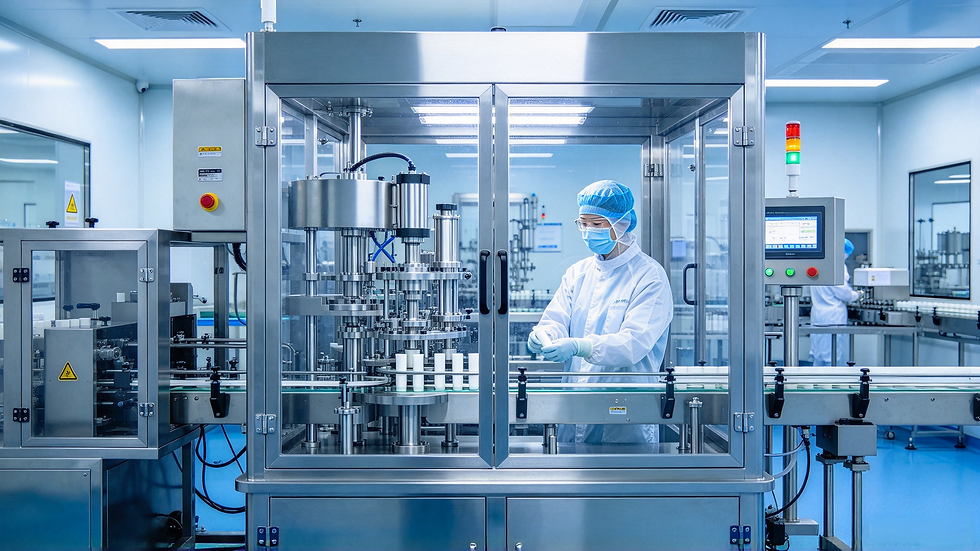
DEVA Skincare runs that screening inside a system built for infant work. Four plants hold 100,000-grade GMPC cleanrooms, and the core laboratory is built to CNAS standards. The test menu holds 150 efficacy and safety protocols, covering cell efficacy and toxicity, the CAM irritation test, melanin inhibition and preservative challenge testing. Six laboratories handle cell testing, efficacy evaluation with VISIA imaging across 12 skin indicators, plant extraction and fermentation, active analysis by HPLC, GC and UV-Vis, packaging tests with xenon arc ageing, and heavy metal detection. The quality system holds 72 inspection and process control steps. R&D works from a library of 5,000 formulas, with 70 granted patents and 17 more under examination. Two platforms, Sensi-Tech UV Armor for Sensitive Skin and Dual-Phase Zinc Locking Technology, were built for mild UV products. One infant mineral sunscreen and one amino acid foam cleanser each ship 13 million units a year. One baby care partner was certified by Euromonitor in 2024 as the leading baby sunscreen brand in Asia, a result that belongs to the brand rather than to the factory.
You are developing a baby lotion, nappy cream, baby wash or baby shampoo. Send your brief through the enquiry form on this page. We will rank your preservative system, your fragrance or essential oil blend and your surfactant base for sensitization risk. We will also show the swaps that clear the risk without breaking your cost target or your launch date.
Which preservatives are safest for a baby formula?
Phenoxyethanol, sodium benzoate, potassium sorbate and dehydroacetic acid carry the lowest sensitization risk. Phenoxyethanol stays at or below 0.5% in most infant formulas, half the 1% limit in Annex V. Sodium benzoate and potassium sorbate work best in mildly acidic formulas. Glycol boosters such as 1,2-hexanediol and ethylhexylglycerin improve protection without adding a sensitiser.
Are essential oils safer than synthetic fragrance in baby products?
No. Limonene, linalool, citral, geraniol and eugenol appear on the Annex III declarable list whether they arrive as an essential oil or as a synthetic material. Oxidation raises the risk further, because limonene and linalool form hydroperoxides that are far stronger sensitisers than the parent molecule. A peroxide limit in the raw material specification is the practical control.
Can a baby wash be sulfate free and still foam?
Yes. Amino acid surfactants such as sodium cocoyl glycinate, sodium lauroyl sarcosinate and sodium methyl cocoyl taurate foam well at lower irritation. Formulators add an amphoteric such as cocamidopropyl betaine and a polymer for viscosity. The foam is finer and the viscosity costs more, because salt thickening works less well in these systems.
Is cocamidopropyl betaine safe for infant products?
It can be, if the grade is controlled. The sensitisers in cocamidopropyl betaine are impurities, mainly 3-dimethylaminopropylamine and residual amidoamine. A low-amidoamine grade with a supplier statement on the residual level removes most of the risk. The INCI name alone does not tell you which grade the supplier used.
How do you screen a formula for sensitization risk without animal testing?
Use the OECD in vitro battery. TG 442C measures protein binding, TG 442D measures keratinocyte activation and TG 442E measures dendritic cell activation. TG 497 defines approaches that combine them into a prediction. Article 18 of Regulation (EC) No 1223/2009 bans animal testing for cosmetic ingredients in the European Union. Human patch tests and an HRIPT close the file.
How long does sensitization risk screening add to a launch?
Plan about four weeks for the in vitro battery, four weeks for the challenge test and four weeks for the HRIPT. Those blocks can run in parallel. Sampling takes one week, and mass production takes six weeks after sample approval. Screening at brief stage keeps the total inside the standard schedule.
What concentration of fragrance allergen must be declared on a baby product label?
Regulation (EU) 2023/1545 sets 0.001% for leave-on products and 0.01% for rinse-off products, and the list now holds 81 substances. Products placed on the European Union market from 31 July 2026 must comply, and stock already on the market may be sold until 31 July 2028. Baby wipes count as leave-on.
Comments